


Bringing Global Brands and Materials Together for Projects
A hotel, commercial, or residential project may require furniture, fabrics, wall finishes, stone, glass, hardware, and bathroom products from several brands and suppliers. Some products may already be specified by brand or model, while others remain open for selection. The project may also require custom furniture, cabinetry, or finishes to suit specific dimensions, functions, or design details. These products and materials need to be coordinated to meet the project's design requirements, budget, and delivery schedule.
IDEAFUSION brings together international brand resources and China-based supply chain partners, both of which can support multiple material categories. Working from the project brief, the team helps source specified products globally, recommends options for items that remain open for selection, and coordinates custom requirements with suitable manufacturers. It then brings these products and materials together in one proposal for the project team to review.
A client can begin with whatever project information is already available, from drawings and material schedules to named brands or visual references. IDEAFUSION organizes these inputs into a coordinated sourcing proposal that identifies suitable options, open questions, and items requiring samples or technical review.
Combining Brands and Materials Around the Project

A multi-country material package should be organized around the needs of each space rather than divided by country of origin. The examples below show how established international brands across a wider range of categories may be combined. They are reference points rather than a fixed or exhaustive brand list. For every category, exact models, dimensions, finishes, technical suitability, availability, quantities, budget, lead time, installation requirements, certifications, and supply terms require project-specific confirmation.
Textiles, Carpets, and Flooring
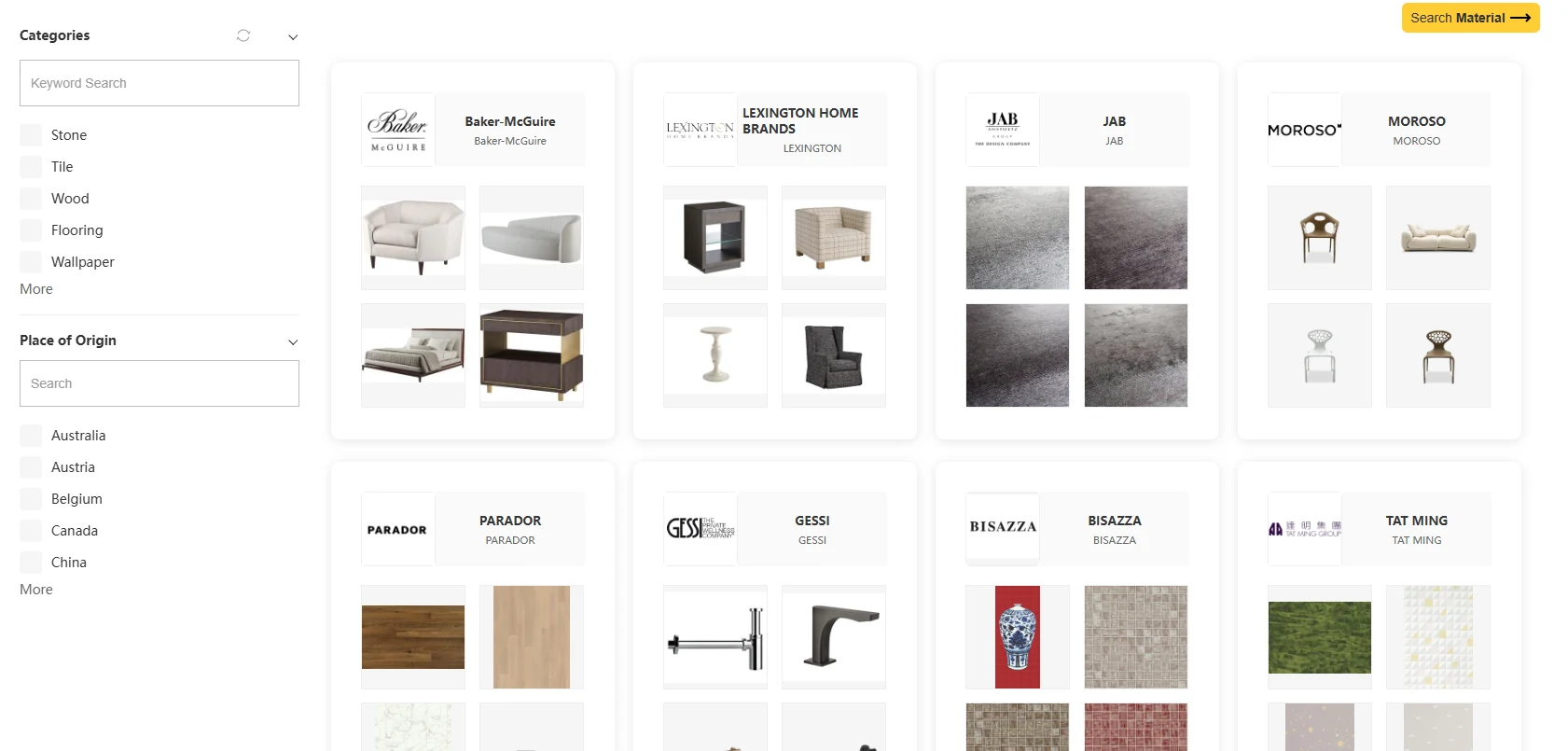
Options for curtain and upholstery fabrics include JAB ANSTOETZ and Kvadrat and Interface can support carpet and modular flooring requirements, while Parador can be considered for engineered wood, laminate, or resilient flooring. In a hotel guest room, fabrics may be used for window treatments, headboards, and seating, while flooring establishes the room's base color, acoustics, and surface character. The team should compare adjoining samples and confirm wear performance, fire or acoustic requirements, and cleaning methods.
Indoor and Outdoor Furniture
Furniture options for lobbies, lounges, suites, residences, and executive spaces include Moroso, Baker, McGuire, and Lexington Home Brands. Those brands offer further choices for guest rooms and residential-style interiors, while Poliform is an option for terraces, pool decks, and other outdoor areas. A project may combine a key seating group from one brand with supporting furniture from another. The team should review comfort, upholstery, outdoor suitability, and compatibility with the approved flooring, stone, metal, and textile palette.
Bathroom Fittings and Sanitaryware
Bathroom selections may combine Gessi taps, showers, and accessories with sanitaryware and related products from Duravit, LAUFEN, Kohler, or Villeroy & Boch. These brands can be used across guest rooms, clubs, spas, and residential bathrooms when the selected ranges meet the design direction and local requirements. Confirm rough-in details, installation interfaces, water pressure and flow, finish durability, maintenance access, replacement parts, and applicable certifications before approval.
Mosaic Tile and Architectural Surfaces
Bisazza can be considered for glass mosaic in bathrooms, pools, bar areas, and feature walls. Marazzi and Florim provide ceramic and porcelain tile options, while Laminamsurfaces can be used for countertops, vanities, wall cladding, and selected furniture applications. Where scale and pattern are important, the team should compare full-size samples or mock-ups and confirm slip resistance, substrate, edge treatment, joint layout, stain and chemical resistance, fabrication limits, and batch consistency.
Decorative and Architectural Lighting
Lighting options include Lasvit and Louis Poulsen for decorative pendants, wall lights, portable lamps, and selected architectural applications. A lobby may require a feature installation, while guest rooms and restaurants need smaller fixtures coordinated with furniture, ceiling details, and controls. Review light output, color temperature, glare control, dimming protocol, driver location, ceiling support, voltage, certification, finish, and maintenance access with the lighting designer.
Wallcoverings and Decorative Finishes
Wallcovering options for guest rooms, corridors, lounges, and residential interiors include Arte, Phillip Jeffries, and JAB ANSTOETZ. Because collections may use paper, vinyl, textile, natural fibers, or other constructions, the team should confirm roll width, repeat, dye lot, backing, substrate preparation, installation method, cleanability, fire performance, humidity exposure, and pattern-matching allowance.
Architectural Glass and Door Hardware
AGC can be considered for interior and exterior architectural glass. dormakaba can support door hardware, closers, locks, and access components, while Häfele provides architectural and furniture hardware options. These products must be coordinated with door, frame, cabinetry, and glass specifications. Verify glass build-up, safety requirements, coatings, edge treatment, hardware load, opening direction, fire and egress requirements, access control interfaces, and local code compliance.
The Five Steps in One-Stop Procurement
The service follows five connected steps. Each step defines what the client provides, what IDEAFUSION coordinates, and what the project team receives before moving forward.
Step One Review the Project Requirements
IDEAFUSION reviews the project information already available, clarifies missing or conflicting requirements, and turns it into a sourcing brief organized by space, category, quantity, budget, schedule, and non-negotiable requirements. This brief becomes the basis for material matching and supplier inquiries.
Step Two Match Materials and Suppliers
Interior designers or material specialists may nominate preferred materials, or IDEAFUSION can help explore suitable options. IDEAFUSION then checks specifications and availability, identifies relevant suppliers, and assesses whether each option aligns with the project budget. The resulting material list records each product's brand, category, intended space, available specifications, supplier information, and outstanding details.
Step Three Review Samples and Confirm Selections
The client identifies the samples and documents needed for review. IDEAFUSION coordinates available samples and collects information such as model, color, finish, dimensions, packaging, application, and other relevant details. The design and project teams then review the samples against the drawings and site conditions.
Following the review, the client confirms the preferred products. Approved samples and specifications are recorded, along with any outstanding issues to be resolved before ordering. IDEAFUSION can also provide relevant performance or compliance documents upon request.
Step Four Finalize Quotations and Purchasing Arrangements
The client confirms the products, quantities, delivery requirements, and service scope. IDEAFUSION then issues a coordinated quotation covering specifications, costs, delivery arrangements, included services, payment terms, and expected lead times. If a product or specification changes, the client can review its impact on the budget, design, and schedule before approval.
Step Five Follow Production and Coordinate Delivery
IDEAFUSION follows the production schedule and the quality inspection scope agreed for the project, then coordinates preparation for shipment. Depending on the confirmed service scope, delivery support can coordinate export documents, international transport, customs clearance, warehousing, consolidation, and distribution. The final destination may be the project site or a warehouse designated by the client. The quotation or project agreement should define inspection requirements, document responsibility, trade terms, transport terms, delivery sequence, and the party responsible for each stage.
Share Your Initial Project Requirements with IDEAFUSION
Project teams can contact IDEAFUSION to discuss material selection, procurement integration, and delivery support. An initial inquiry should include the information already available rather than waiting for every specification to be complete. Useful inputs include:
• The project location, project type, and the spaces where the materials will be used.
• Available design drawings, material schedules, BOQ or FF&E lists, and reference images.
• Brands or products already under consideration.
• Estimated purchase quantities, budget range, and target delivery time.
• The procurement and delivery stages that require support.
This information allows IDEAFUSION to begin the sourcing review and agree on the next step. Submit Your Project Requirements →


