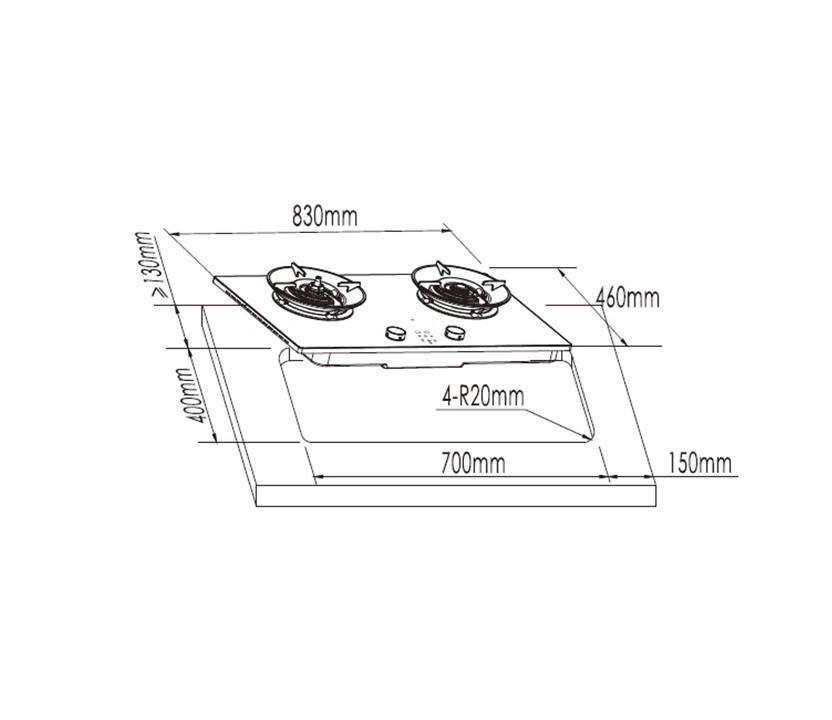
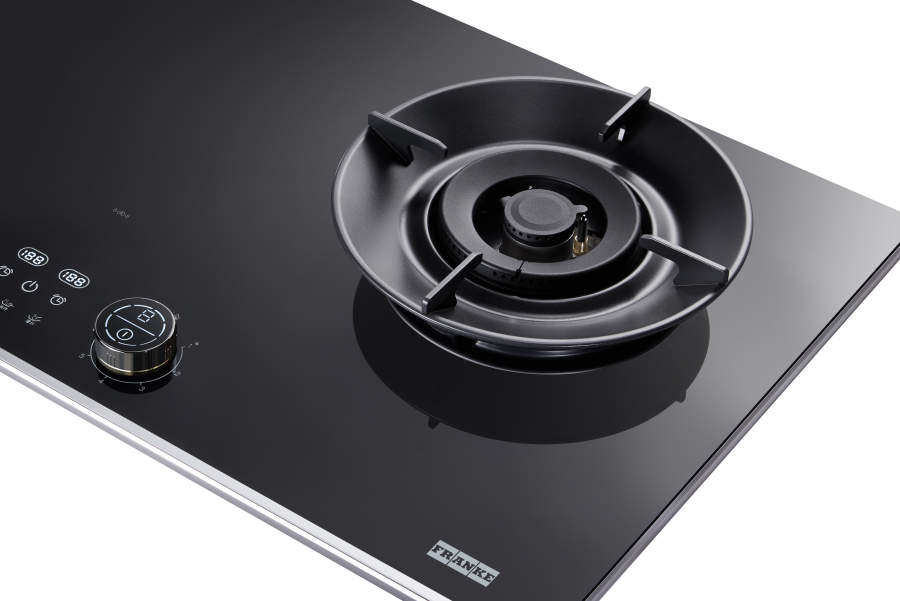
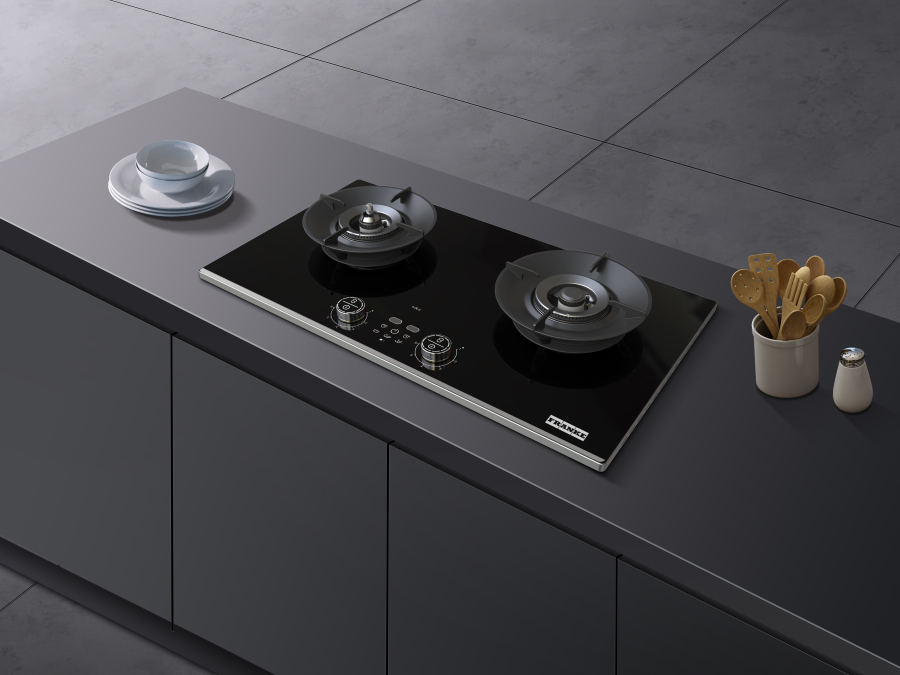
• Appliance dimensions (W×D×H): 830 × 460 × 160 mm
• Cutout dimensions (W×D): 700 × 400 mm, 4-R20
• Accessories: Small pot support ×1, clamp ×2, adapter ×1
Attention
Natural Gas Safety Precautions
1. Pre-Use and Post-Use Checks
a. Before lighting the appliance, check for gas leaks. Ensure proper ventilation during use and never leave the appliance unattended.
b. After use, turn off the main gas valve. At the end of each day, a designated person must confirm that the main valve and all appliance knobs are completely closed. Always make sure the gas supply is shut off when the area is unoccupied – never leave gas running overnight with no one present.
2. Prohibited Practices
• Never remove, modify, relocate, or enclose any gas equipment without proper authorization.
• Do not place heavy objects on gas pipes or equipment.
• Do not use gas pipes as a support, or wrap electrical wires and cables around them, or use them as grounding conductors.
• Never store flammable or explosive materials in rooms containing gas appliances. These rooms must not be used for sleeping or as a location for any open flame activity.
• Do not store or use two or more fuel types (e.g., LPG cylinders, diesel) in the same space.
• Cooperate with your gas supplier during inspections, maintenance, and emergency repairs. Rectify any detected hazards promptly.
• Only use gas appliances that have been certified as compatible with the local gas supply. Do not use appliances that have reached their end of life or been officially scrapped.
• If you notice a smell like "rotten eggs", it may indicate a gas leak. Take immediate action.
• Regularly check flexible connectors for aging, cracks, or rodent damage (typical service life is 18 months). Use corrosion-resistant connectors such as stainless steel corrugated tubing or galvanized steel pipe.
• If the gas supply is interrupted (planned or unexpected), close the appliance valve and the shut-off valve upstream. Before leaving the area or upon receiving a supply interruption notice, double-check that all valves are closed. Always extinguish flames and close valves before leaving.
• Never use an open flame to test for leaks. If you detect a leak or notice any abnormal condition of indoor gas pipes or appliances, immediately close the main valve and open windows for ventilation. Do not perform any action that could cause a spark (such as operating electrical switches). Cut off the electricity supply at a safe distance from the leak, then call the emergency number from outside – do not use a phone inside the room where gas is suspected.
3. Regular Inspections
a. Schedule routine maintenance for gas pipes, pressure regulators and other equipment to ensure they are free of oil, corrosion, deformation or signs of aging, and are not operating in a dangerous state.
b. To check for leaks, never use a flame. Use a combustible gas detector or apply a soapy water solution to all joints and fittings, making sure no area is missed.
c. Protect all gas facilities and pipelines within your property. Any relocation or modification must be carried out by a qualified professional with the gas supplier’s consent.
d. Keep gas equipment and pipes free of obstructions. Do not store any objects around them, and ensure clear access for maintenance and emergency egress.
4. Five “Never” Rules for Natural Gas
(1) Never add, alter, or remove gas fixtures and appliances without approval. If changes are necessary, obtain permission from the gas supply company and have the work performed by a licensed gas installation contractor.
(2) Never enclose or conceal gas pipes, valves, meters, or appliances inside walls, ceilings, or cabinets.
(3) Never hang electrical wires, ropes, or any objects from gas pipes.
(4) Never tamper with the gas supply, steal gas, or redirect the flow illegally.
(5) Never break or interfere with the meter, its seals, or any locking devices.
5. Handling Malfunctions
If a natural gas appliance or system malfunctions, do not attempt to disassemble or repair it yourself. Close the main valve, move outdoors, and contact your gas supplier’s emergency service to request a professional inspection and repair.