


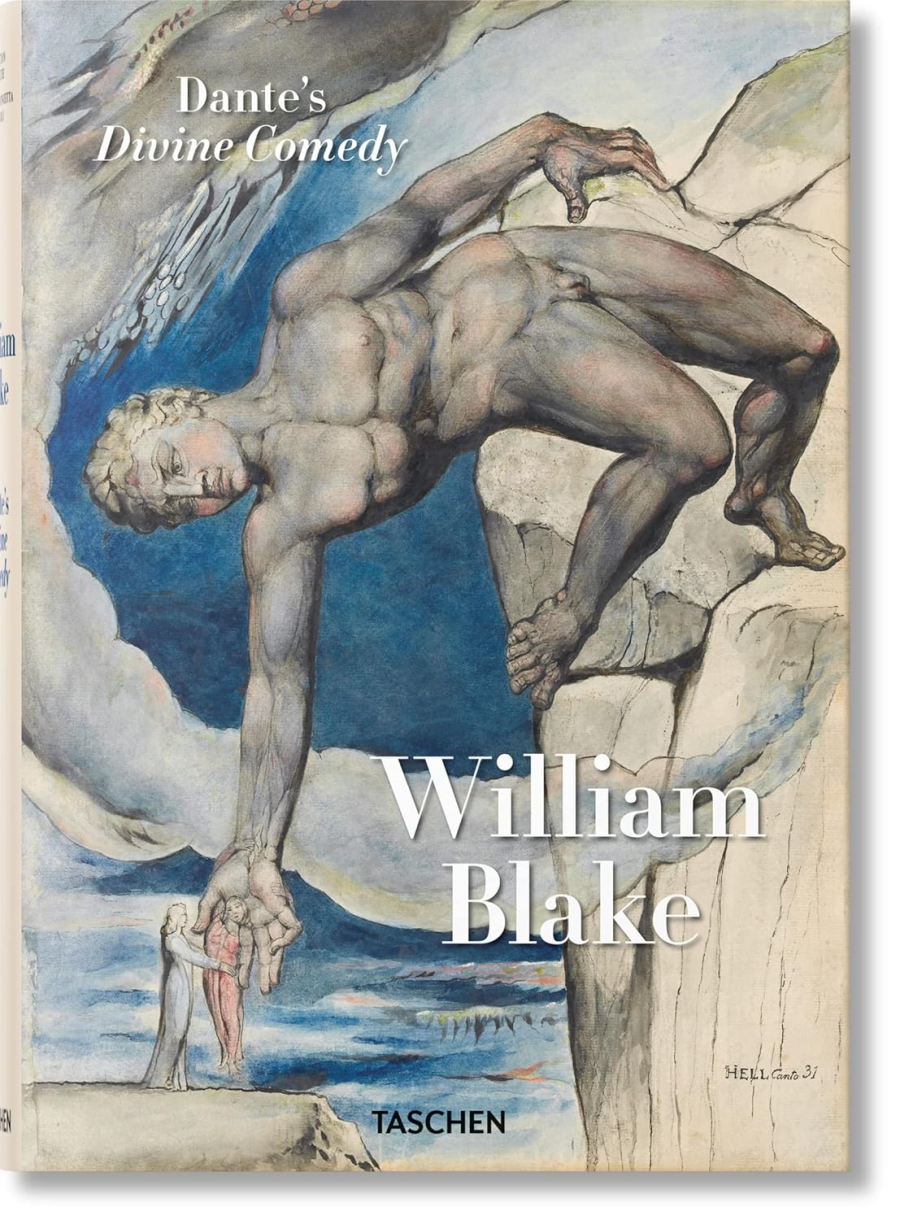
William Blake. Dante's 'Divine Comedy'. The Complete Drawings

Details
Completed in 1321, Dante Alighieri’s (1265–1321) Divine Comedy is celebrated around the world as a literary monument and widely considered the greatest work ever written in the Italian language. The epic poem describes Dante’s journey through Hell, Purgatory, and Heaven, and on a deeper level represents the soul’s path toward salvation. In the last years of his life, the Romantic poet and artist William Blake (1757–1827) created 102 illustrations for Dante’s masterpiece, ranging from pencil sketches to finished watercolors.
Like Dante’s all-encompassing poem, Blake’s drawings move from infernal scenes of agony to celestial light, from hideous human disfigurement to perfect bodily forms. While remaining faithful to the text, Blake brings his own perspective to some of Dante’s central themes. Today, Blake’s illustrations, which were at various stages of completion when he died, are scattered across seven different institutions.


