
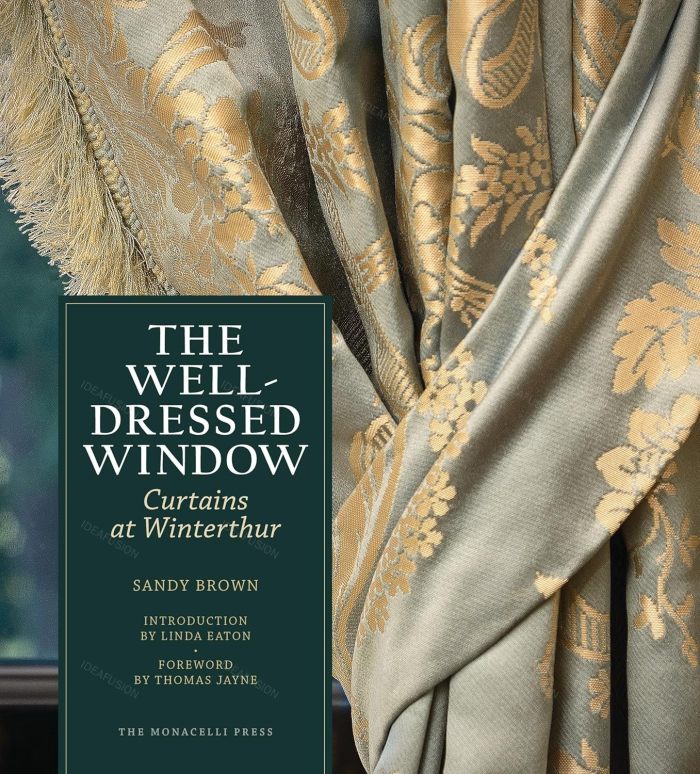


The Well-Dressed Window: Curtains at Winterthur


Details
With forty rooms and their thoughtfully dressed windows, Winterthur is an essential resource for documenting window design and detailing. Well-Dressed Windows: Curtains at Winterthur is a unique compendium of design and textile history—an invaluable resource for designers and homeowners alike. Today Henry Francis du Pont—the creative force behind transforming the Winterthur estate from a family home into America's premier museum of decorative arts—is recognized alongside Henry Davis Sleeper and Elsie de Wolfe as one of the early leaders of interior design in the United States.
Du Pont worked with architects, curators, and antiques dealers to create approximately 175 rooms in the house. He incorporated architectural elements from historic East Coast buildings and filled the rooms with extraordinary American furniture and decorative arts. Du Pont’s particular talent lay in his ability to arrange historically related objects in a beautiful manner, enhancing their shapes and forms through carefully chosen colors, textiles, and styles.
Du Pont paid special attention to the design of curtains. Well-Dressed Windows revisits his achievement, explaining how fabrics were selected and how they relate to the architecture and other decorative elements inside the rooms. Forty rooms are presented, each specially photographed to show the overall space along with details of textiles and trim. A series of stereographic views from the 1930s, as well as photographs from other periods, reveals how window treatments and upholstery evolved over nearly six decades.
Of particular interest are Du Pont’s seasonal curtain changes: the drapes were rotated throughout the year in response to the shifting light and color of the surrounding gardens.


