




JULIAN SCHNABEL


Details
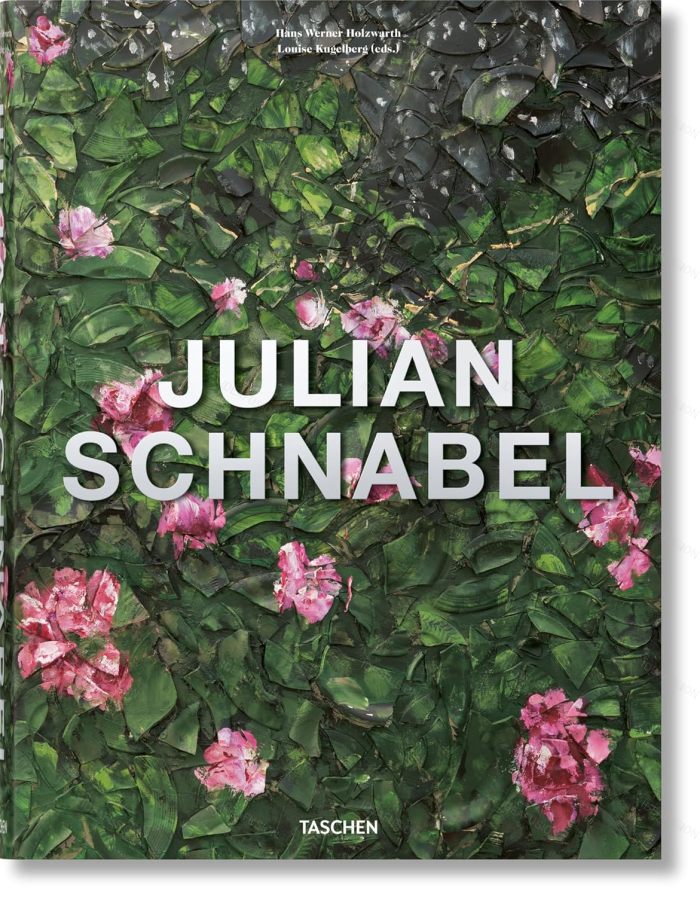
Julian Schnabel creates art from life, finding materials in everyday existence. He used broken plates as impossible pictorial foundations; he painted on velvet, market stall covers, military tarpaulins, Kabuki theater backdrops, and boxing ring floors—surfaces that provide a rich history for the artist’s explorations. He became famous overnight after his first solo exhibition in New York in 1979, a figurehead for the return of painting, and has since worked in various media: making sculptures that transfer his painterly forms into space as raw, seemingly obsolete artifacts; directing award-winning films that portray artists and other subtle heroic characters; even building his own Venetian palazzo dream in New York. ‘I want my life to be in my work, pressed into my paintings like a car crushed inside a car. If not, my work is just something,’ Schnabel says, and this urgency pervades his work no matter the medium or mode.
Schnabel’s entire oeuvre is now available in a popular edition, depicted with unprecedented depth in this TASCHEN monograph in conversation with the artist. The texts are contributed by friends and collaborators: Laurie Anderson paints an intimate portrait of Schnabel; in three essays, curator and art historian Éric de Chassey discusses the paintings, Bonnie Clearwater discusses the sculptures, and Max Hollein discusses site-specific works; Donatien Grau writes on Palazzo Chupi, the artist’s extravagant residence in New York’s West Village; and novelist Daniel Kehlmann explores his film oeuvre. This edition allows you to study surfaces and the gestures and movements of art, offering the most generous opportunity to experience Schnabel’s art short of seeing it in person.


