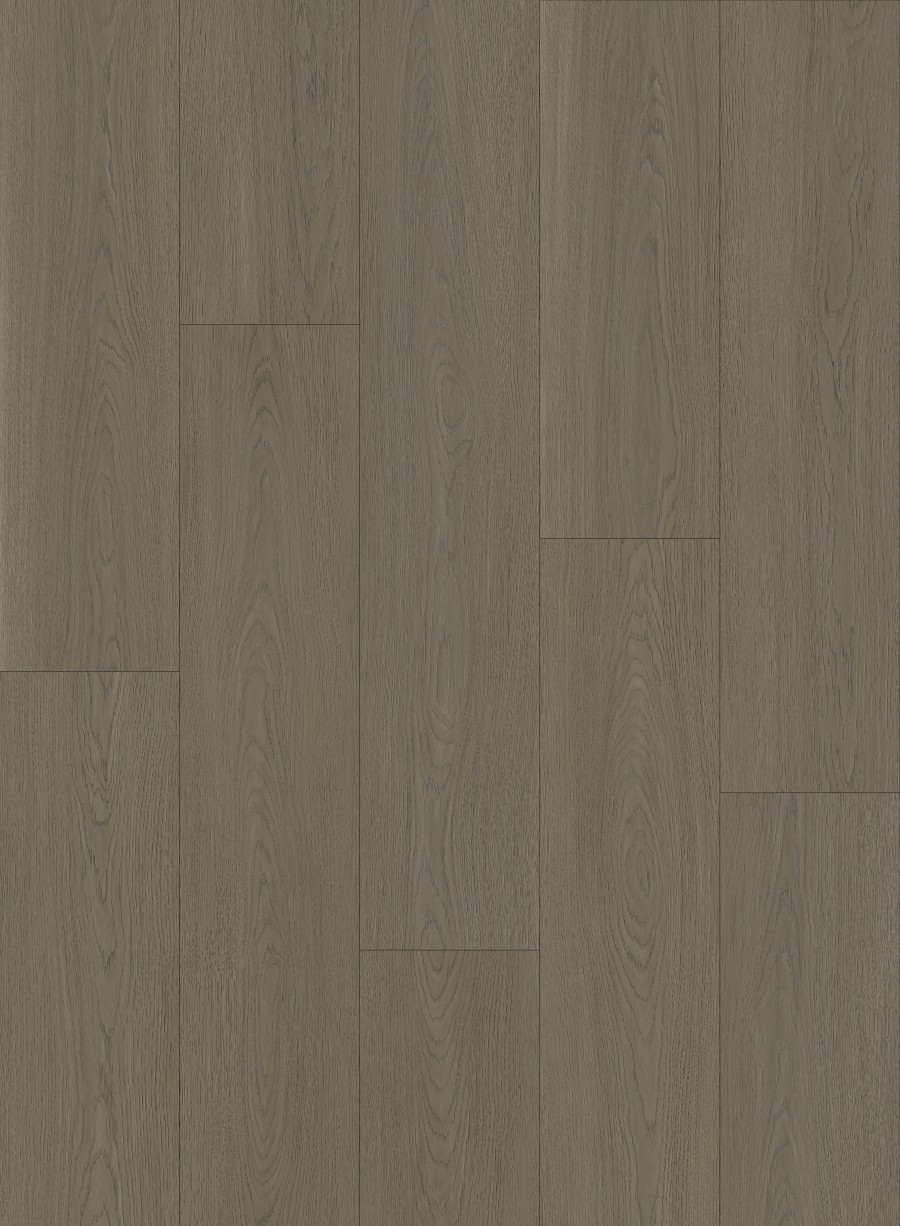
The product is mainly made of polyvinyl chloride (PVC) and calcium carbonate (natural stone powder). The production process is as follows: 1. Mixing – blending raw materials in large industrial mixers; 2. Extrusion – forming the mixed material into base sheets of required thickness; 3. Steam hot pressing – a 500‑ton steam press bonds the decorative film, wear layer, and base sheet together for 45 minutes; 4. Conditioning – resting for 24 hours to allow the material to stabilize in air; 5. Tempering – passing the product through long cold‑water and hot‑water baths to improve dimensional stability through thermal expansion and contraction; 6. Conditioning – another 24‑hour rest; 7. Grooving – cutting to size and milling click‑lock joints; 8. Testing – laboratory quality inspection; 9. Attaching – applying an acoustic underlayment; 10. Packaging; 11. Warehousing. Available sizes include 600×125 mm, 600×100 mm, 1220×181 mm, and 150 mm; please inquire for exact dimensions.
Attention
PVC Flooring (All Types) Daily Maintenance and Care Tips
This guide applies to all PVC flooring series, including: LVT luxury vinyl tile, SPC rigid click-lock flooring, standard WPC wood-plastic composite flooring, WPC Pro premium co-extruded flooring, commercial sheet & tile flooring, and hospitality-grade PVC flooring. It is universally applicable for both residential and commercial use.
I. Daily Cleaning Routine (Core Standards)
1. Daily Dust Removal
Use an electrostatic dust mop, soft-bristle vacuum, or soft broom to remove surface dust, sand, and debris. Sand is the primary cause of wear on PVC floors; high-traffic areas (entryways, hallways, office corridors, hotel lobbies) should be cleaned daily. Never use steel wool, hard brushes, or metal tools, which can scratch the wear layer.
2. Damp Mopping Standard
Use only a well-wrung, slightly damp mop. The floor should dry quickly with no standing water. Regular stains can be cleaned with water; for grease, footprints, or stubborn marks, use a diluted neutral pH floor cleaner specifically formulated for vinyl flooring.
Absolutely prohibited: bleach, strong acid/alkaline cleaners, oxalic acid, scouring powder, high-concentration alcohol, banana oil, thinner, and other corrosive solvents. These will damage the surface, causing fading, loss of gloss, and cracking.
3. Spill Emergency Treatment
Liquids such as tea, juice, alcohol, oil, ink, and cosmetics must be wiped up immediately to prevent seepage into seams and staining. For sticky residues, apply a dedicated PVC adhesive remover to a cloth and gently wipe; do not scrape aggressively.
II. Water & Moisture Protection
All PVC flooring has excellent water resistance but is not intended for prolonged standing water. Promptly dry any standing water, mop residue, wall seepage, or air-conditioning condensation. Long-term water exposure can cause seam blackening, mildew, and affect stability. In water-prone areas like kitchens, balconies, and bathroom entrances, use absorbent floor mats. During rainy or humid seasons, maintain indoor ventilation and a dry floor surface; no special dehumidification is required, simply keep the environment dry.
III. Scratch, Pressure & Abrasion Prevention
All furniture legs (chairs, tables, cabinets, sofas, beds) must be fitted with soft rubber or felt glides to prevent direct contact of metal or hard plastic. Always lift and carry heavy furniture when moving; never drag or push. Keep sharp objects (knives, metal corners, gravel) from directly striking or scratching the floor. Stiletto heels or hard cleats can cause surface damage under prolonged pressure; this must be managed in commercial settings. In high-traffic public, office, or hotel areas, use dust-control entrance mats to trap outdoor sand and grit, greatly extending floor life.
IV. Temperature & Sunlight Care
1. Underfloor Heating Compatibility
PVC flooring is fully compatible with underfloor heating systems and is an optimal choice. Standard care: heat and cool gradually, avoid sudden temperature swings. The surface temperature should ideally be kept within 28°C (82°F). During heating season, avoid excessive dryness; maintain indoor humidity between 40%-60% to prevent minor shrinkage and seam widening. When the heating is on, do not cover large areas with thick rugs or place fully enclosed, floor-standing cabinets, which can cause localized heat buildup and uneven heating.
2. Sunlight & UV Protection
Long-term intense direct sunlight accelerates surface aging and may cause slight color variation. In areas with floor-to-ceiling windows or direct sun, use curtains or blinds during peak sunlight hours to reduce UV exposure and keep the floor color uniform and lasting.
V. Strictly Prohibited Operations (Red Lines)
1. Never use floor scrubbers, pressure washers, floor polishers, or sanding machines on PVC flooring.
2. Never wax, polish, varnish, or seal the floor; the factory-applied wear layer does not require secondary treatment. Artificial waxing can clog pores, attract dirt, and become sticky.
3. Never place high-temperature sources (boiling water, pots, heaters, charcoal) directly on the floor to avoid burn marks and deformation.
4. Never perform sharp operations, allow heavy equipment to roll over, or place sustained single-point heavy pressure on the floor to prevent local indentations.
VI. Commercial & Contract Application Notes (Hotels, Offices, Clubs)
1. High foot traffic and frequent use require increased daily dust removal and cleaning frequency; promptly remove sand and debris.
2. Office carts and hotel service trolleys must use soft rubber casters; hard wheels are prohibited to prevent scratches.
3. Heavy-wear zones like corridors, hallways, and elevator landings require regular inspection and prompt removal of stubborn stains to maintain clarity.
4. For large-scale commercial installations, periodically check expansion joints, ensure stable ventilation, and no special maintenance is needed.
VII. Simple Repair for Common Issues
1. Minor scratches: use a PVC floor repair paste or matching touch-up pen to locally conceal the scratch.
2. Stubborn black marks or adhesive residues: gently wipe with a neutral adhesive remover or cleaning paste.
3. Minor indentations: remove the heavy object and allow the floor to rest at room temperature for a few days; it will gradually recover on its own.
VIII. One-Sentence Summary
PVC flooring is waterproof, wear-resistant, and easy to maintain. Avoid standing water, strong acids/alkalis, violent dragging, and high heat & sun exposure. With daily dry sweeping, slightly damp mopping, and scratch protection, it will remain beautiful and durable for years.