
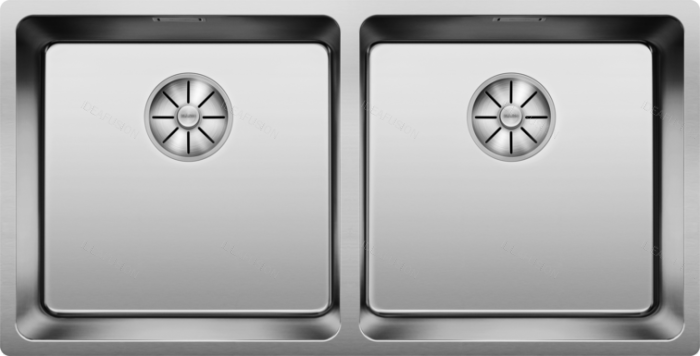


Stainless Steel Kitchen Sink

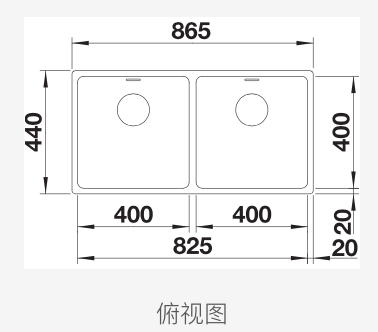
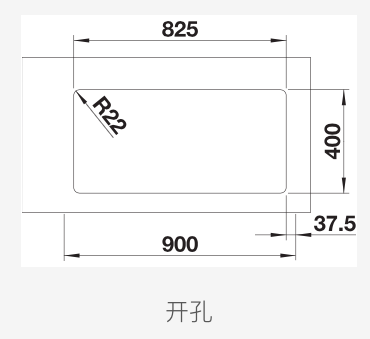
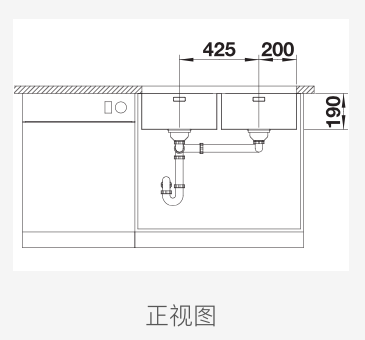
Details
Attention
Avoid These Cleaning Mistakes
- Do not use harsh cleaners, abrasive cleaners, or bleach containing hypochlorite.
- Do not soak silver surfaces.
- Do not use spiky brushes or the rough side of a sponge (especially scouring pads).
- Do not use steel wool.
These tools can scratch and permanently damage the stainless steel surface of your sink.
Daily Cleaning
All stainless steel surfaces should ideally be cleaned immediately after use. This helps prevent limescale buildup. The process is simple: apply a small amount of washing-up liquid to the soft side of a sponge. Follow the grain of the stainless steel as you clean. Look at the surface from different angles to see the brushed direction. Rinse with clean water and dry with a microfiber cloth. This also helps prevent limescale. And you're done!
Important: never clean in a circular motion, as this can permanently alter the surface structure, especially on satin matte finishes. Also, be aware that over-polishing a specific spot can change the gloss level in that area.
Not Every Stainless Steel Surface is the Same
After all, not all stainless steel is equal! In its original state, natural-finish stainless steel is durable. These surfaces can be treated with descaling agents, lemon, or acetic acid cleaners. Linen-textured, satin matte, and Durinox finishes can also be cleaned this way.
Durinox finish uncoated stainless steel is extremely hard, making it twice as durable as traditional stainless steel surfaces; however, never use any polish on it. A damp microfiber cloth or a soft sponge without any detergent works perfectly for daily cleaning. A major advantage of Durinox stainless steel is that it helps reduce fingerprint marks.
Brushed or satin-polished stainless steel surfaces require more care. Always polish these surfaces along the grain direction.
How to Remove Stubborn Limescale
Acetic or lemon-based cleaners are effective for removing limescale. They clean thoroughly and biodegrade easily. However, be cautious if your cleaner contains additives: for most stainless steel surfaces, these added ingredients are often corrosive. If they contain descaling agents, tiny particles in the liquid may abrade and damage the surface.
To be safe, choose pure vinegar essence, a traditional household cleaner. Dilute it with water at a 1:10 ratio. Alternatively, you can use BLANCO Antikalk: its formula is specially designed for cleaning BLANCO sinks and mixer tap surfaces. Gentle yet highly effective.
Again, always clean along the grain, never in circles. Then rinse thoroughly with clear water to remove any residue. Finally, dry the sink with a microfiber cloth.
Regular Deep Cleaning
Every 3 to 4 weeks, give your stainless steel sink a deep clean with a suitable polish. Exceptions: Durinox, satin matte, natural, or linen-textured finishes. These finer surfaces should not be polished.
For all other stainless steel surfaces: the polish creates a protective seal that reduces limescale formation and helps minimize fingerprints. Over time, regular treatment builds a protective layer, disguises scratches, and enhances shine.
That’s the benefit of a little occasional polish! We recommend BLANCO Polish. It seals the surface so water beads off more easily. The result: less limescale buildup and a lasting, even sheen.
How to polish correctly: apply polish to the soft side of a sponge and work along the grain. Rinse with clean water and dry with a microfiber cloth. Polish gently – over-working one spot can make it shinier than the rest of the sink, spoiling the overall look.


