
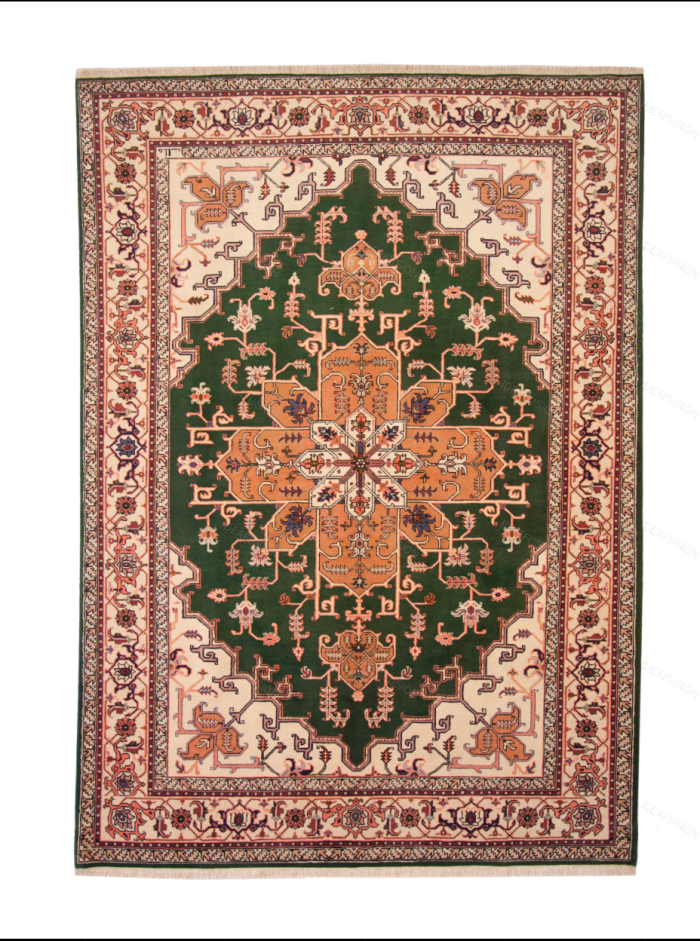


Iranian Handmade Persian Rug


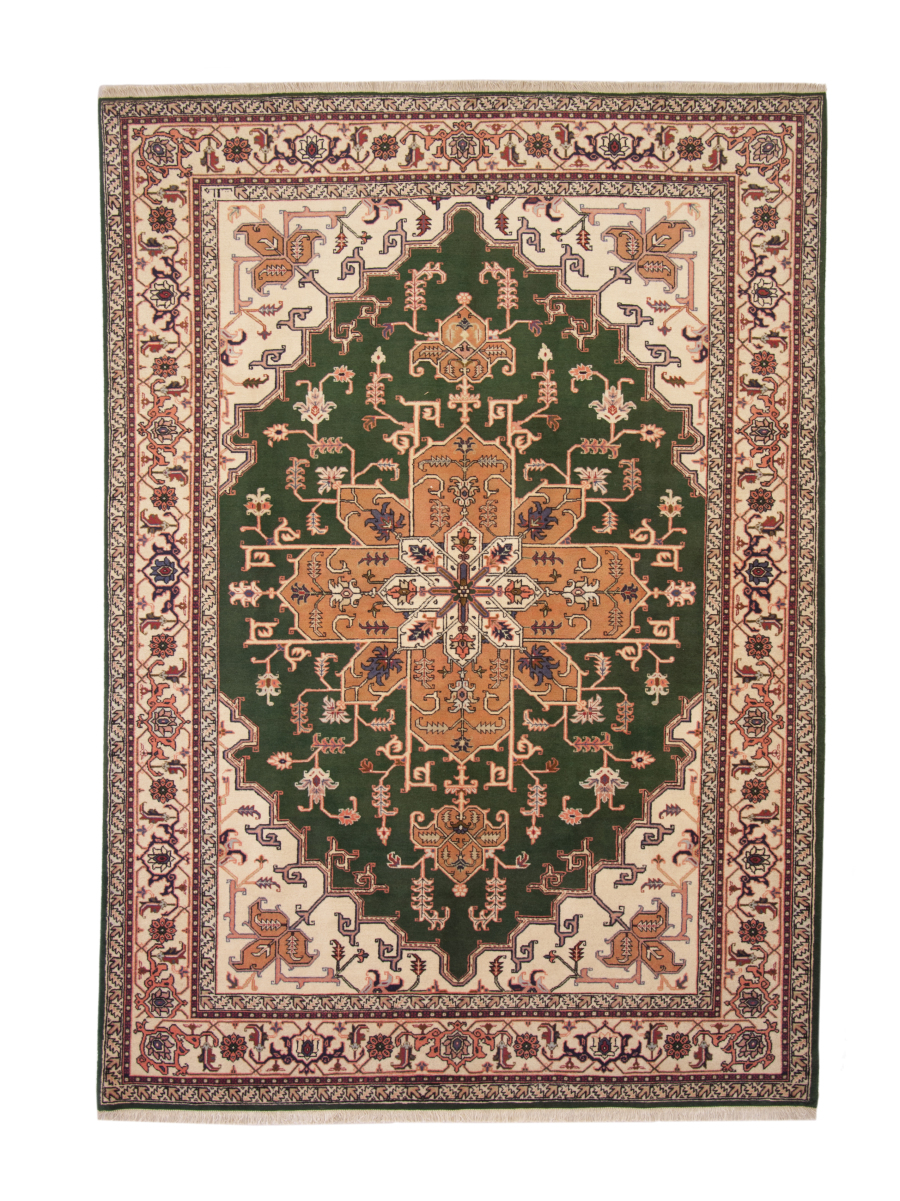
Details
Ardabil Rug
Wool origin: local sheep’s wool from the Ardabil province in northwestern Iran, at the foot of Mount Sabalan.
Clean pastures and a cool climate yield a wool that is pure white, lustrous, and renowned as one of the finest Persian wools.
Product highlights
• Historical status: Ardabil rugs represent one of the oldest carpet traditions in northwestern Iran and reached their peak during the Safavid dynasty (16th–17th centuries). The Ardabil Carpet housed in London’s Victoria and Albert Museum is the world’s most celebrated antique Persian rug.
• Technique: predominantly Turkish (symmetric) knots, woven at exceptionally high density.
Knot density: 120,000–300,000 knots/m² — dense, heavy, and resistant to deformation.
Feel: firm, weighty, and hard-wearing; often called the “iron carpet.”
• Design: central medallion with four-corner symmetry; classic Herati (mahi) pattern — diamond shapes with small fish motifs, highly recognizable.
Geometric and floral fusion: bold geometric lines are softened with arabesques and palmettes. Multi-layered borders: narrow guard borders, dense patterns, and pronounced depth.
• Palette: dominant hues of deep red, navy, forest green, ivory, and golden brown. Strong contrast with a rich, grounded feel. Colored with natural plant dyes that gain character and patina over time.
• Style: dignified, elegant, and stately with a regal presence. Works beautifully in traditional, European, Chinese, or luxury-contemporary interiors — living rooms, studies, and bedrooms alike.
The Ardabil Rug: a royal heritage piece — enduring, commanding, and timeless.


