


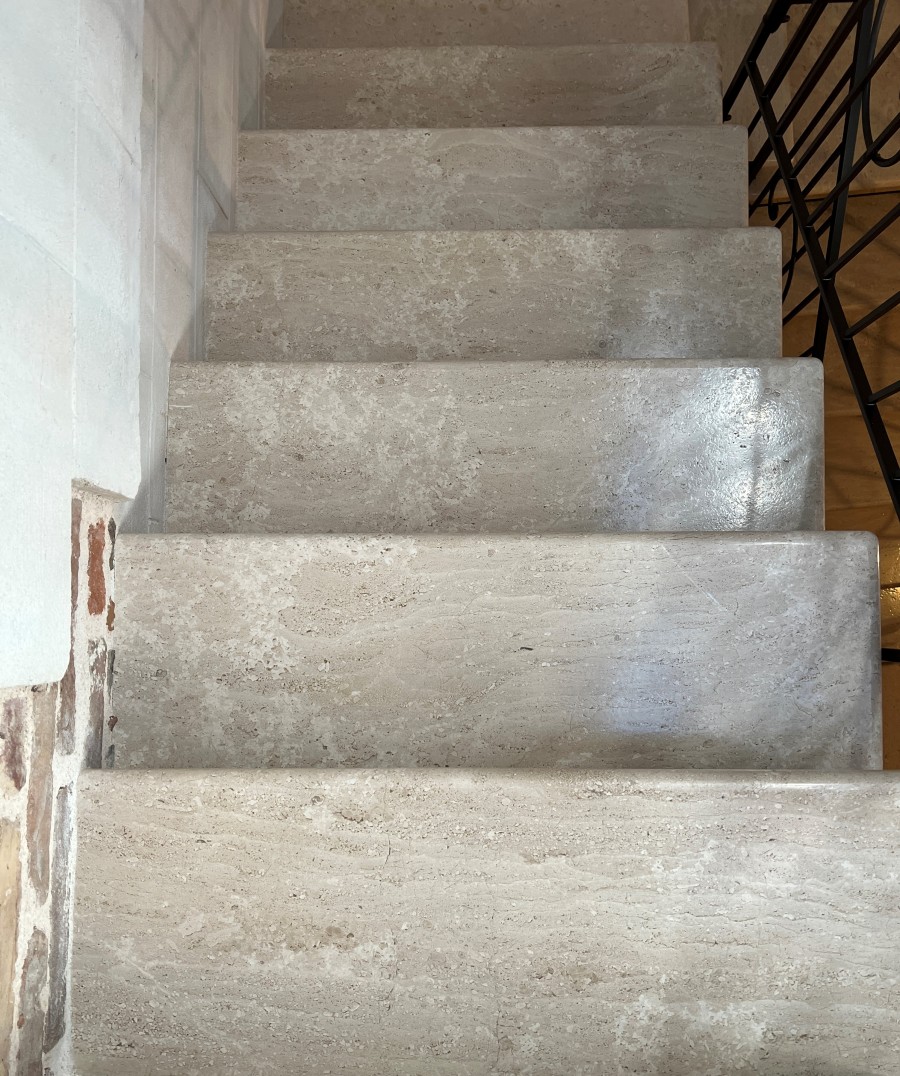
White Almond


Attention
1. Subfloor cement must not be excessive. Cement comes in various strength grades such as 32.5 MPa, 42.5 MPa, etc. For flooring, a grade of 32.5 MPa (equivalent to Type N) is recommended.
2. Stone installation methods include: A) Wet-set mortar, B) Mechanical cladding (dry-fix), C) Adhesive bonding.
Wet-set mortar: When using the wet-set method, avoid sea sand. Sea sand contains high salt levels that can penetrate the stone and cause efflorescence. The bedding layer should be a stone bonding mortar. Use an off-white mortar to prevent colour bleeding. High-quality, internationally recognized products such as Mapei white stone adhesive mortar or Laticrete stone bonding mortar are recommended.
Mechanical cladding (dry-fix): For a dry-fix system, the anchoring slots must be completely filled with epoxy anchoring adhesive. All anchors must be certified stainless steel components that meet industry standards (stone thickness must be at least 2.3 cm).
Adhesive bonding: Use a structural adhesive to bond the stone. This method is commonly used in furniture applications.
3. Important polishing notes: Polishing must progress through grit sizes sequentially from coarse to fine; do not skip grits. Always wet-polish with clean water—never dry-polish. Remove the slurry promptly after each step. Pay special attention during the final polishing stage: the surface must be free of any slurry residue. If slurry remains in the pores of the stone, the dried stone dust will turn white, creating an obvious contrast with the natural stone colour and resulting in extensive spotty discolouration.
After completing large-area polishing, perform the most thorough cleaning possible and keep the surface completely dry. Then apply a crystallizing compound with a white polishing pad, allowing the stone to fully absorb the compound. This ensures the final finish is not compromised.
Important: During installation, the back of the stone must never come into direct contact with cement paste. Cement is highly alkaline and direct contact easily causes efflorescence. Smoking is strictly prohibited on site to prevent cigarette butts from contaminating the mortar. Keep the work environment dry and clean. Dampness or standing water can readily trigger efflorescence. The indoor floor must remain dry; moisture leads to efflorescence and stone deterioration. Immediately after stone installation, cover the surface with protective film or gypsum board to prevent foot traffic and construction soiling.


