


P2 Manager Desk


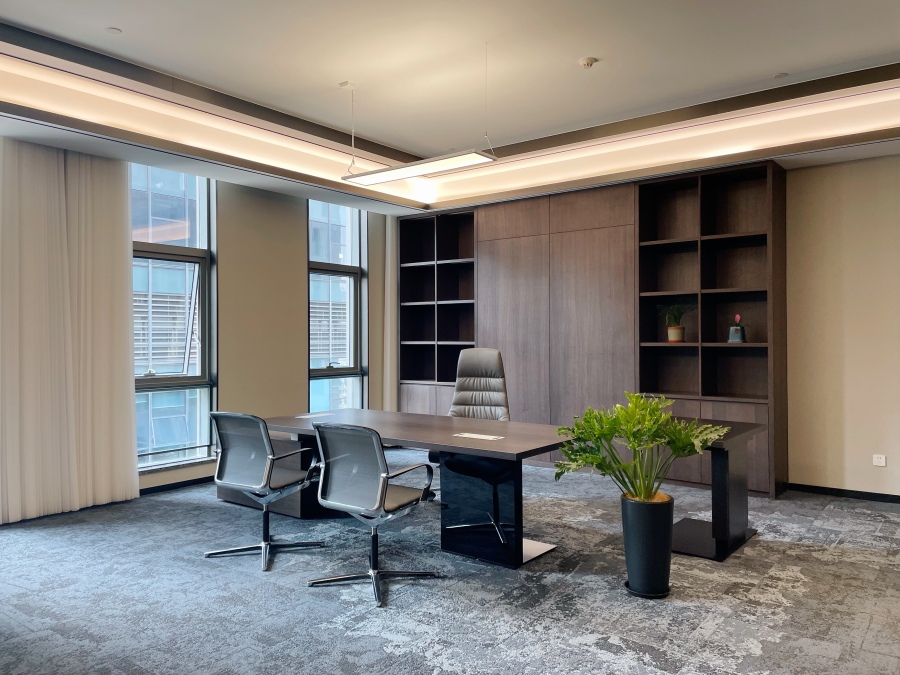
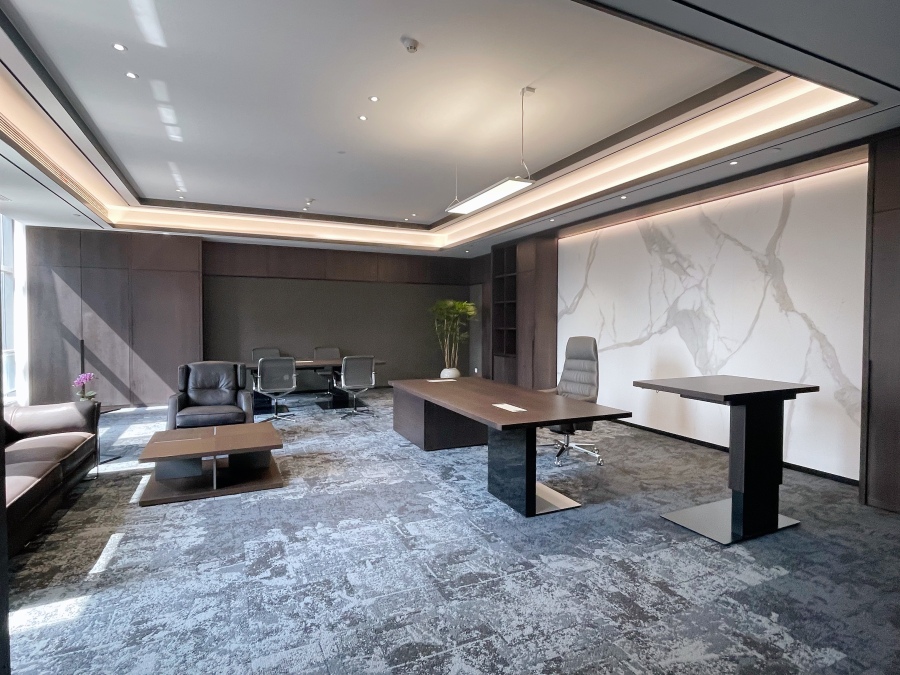

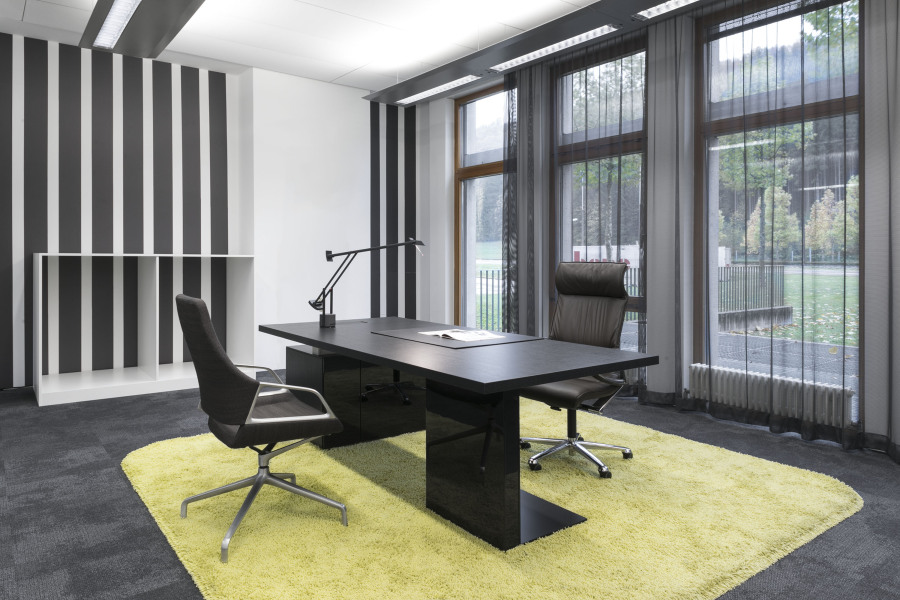
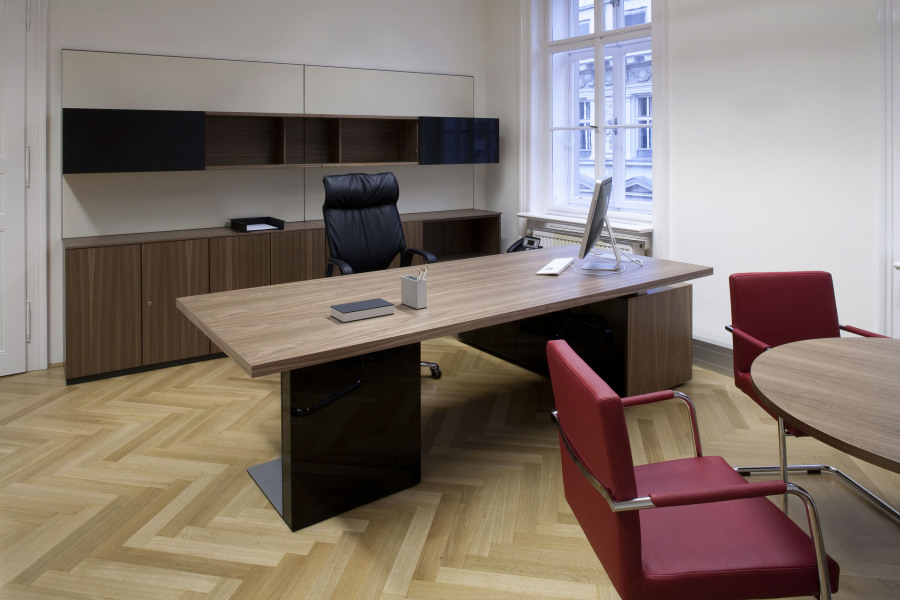
Details
Attention
CLEANING OF PAINTED VENEER SURFACES
General facts: Please remember that wood / veneer is a natural product and thus discrepancies
in colour and structure can occur in the wood. This is no reason for a warranty claim;
rather, it proves that the wood is genuine. The characteristics of the wood‘s structure and
natural growth are retained by the coat of paint. The coat of paint prevents greying due to
penetration of dirt and / or liquids into the wood‘s structure. Our painted veneer surfaces‘
scratch resistance, which is constantly monitored in our laboratory in a statistically secure
fashion, has a value of 1.1 N (Newton). The necessary scratch resistance values have been
established by the standards EN 438-2; ÖNORM A 1605-12. According to these standards,
painted surfaces must have a value between 1.0 N and 1.4 N.
For veneer surfaces painted on an open-celled wood (oak, nutwood and bamboo), the use
of wood / furniture polish (e.g., „Neupol hell“ [Neupol light] or „Neupol dunkel“ [Neupol
dark]) must be avoided during repeated cleanings. Such polishes are deposited in the open
cells, close these off and after some time cause the surface to look greasy. The desired
semi-gloss and open-cell veneer look is thereby ruined. For veneer surfaces painted on a
closed-celled wood (beech and maple), off-theshelf furniture polish can be used. These
polishes fill in the tiniest scratches in the paint and cover these fairly well. Here, too, a
stronger surface gloss can hardly be avoided.
By no means use silicon polishes, caustic cleaning agents containing ammonia („spirits
of hartshorn“), alcohol or softener additives. The same is true for scratchy cleaning agents
with added abrasives or aggressive cleaning agents containing sand. By no means should
you use a cleaning sponge’s rough side, or, worse yet, steel wool. Do not use polishing
agents, detergents, bleaching agents, or cleaning agents containing strong acids or very
acidic salts. Never use steam cleaning equipment. Lightly soiled / dusty surfaces should
be cleaned with a dusting cloth and / or a slightly damp soft cloth and subsequently dried
with another soft cloth. Make sure you don‘t wipe against the wood grain, because then
dirt cannot be removed from the cells.
Sticky dirt should be cleaned with water. An off-the-shelf, solvent-free dishwashing detergent
should be added to the cleaning water (low detergent dose). Subsequently, the
surface must be wiped with clear water (slightly damp) and then dried. Drying must occur
because the dampness can infiltrate the paint, leading to hairline cracks in the paint that
lift the paint off over time. Removal of slight scratches from open / closed cell painted veneer
surfaces: We recommend using „NEUPOL“ polishes (Neupol light; Neupol dark) from
Regema (Austria) (please follow the instructions for use and the safety fact sheets of the
cleaning agent you are using). You should use furniture polishes at most 2-3 times per
year, because otherwise the surface will look greasy in the long run.


