


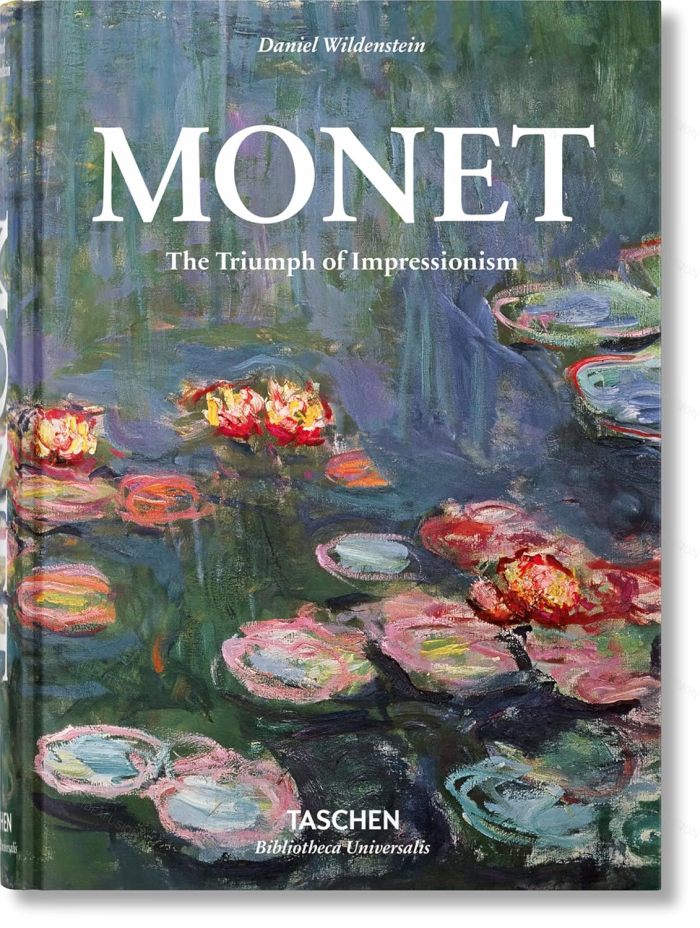


Monet. The Triumph of Impressionism

Details
From Édouard Manet’s portrait of the naturalist writer Émile Zola seated among his Japanese art objects, to Van Gogh’s meticulous copies of Hiroshige prints he proudly collected, the pioneers of 19th-century European modernism made no secret of their love for Japanese art. Woodblock prints, with their sensuality, freedom, and vitality, are credited with fueling the wave of Japonisme that first captivated France and later swept across Europe—yet they are often misunderstood as merely “exotic” curiosities that helped ignite Western creativity. In truth, the Japanese woodblock print is a phenomenon without a Western equivalent.
Some of the most disruptive ideas in modern art—including what Karl Marx called “all that is solid melts into air”—were invented in Japan in the 1700s and expressed with unprecedented power in the designs of masters such as Hokusai, Utamaro, and Hiroshige in the early 19th century. Derived from the original XXL monograph, this volume lifts the veil on a much-beloved but little-understood art form by presenting the most unique Japanese woodblock prints within their historical context. From the development of decadent ukiyo-e, or “pictures of the floating world,” in the 17th century, to the decline and later resurgence of prints in the early 20th century, the collected images in this edition form not only an unrivaled record of a unique genre in art history, but also a compelling panorama of Japan’s shifting customs and cultural development.
We witness how these works, ranging across an incredible breadth from daily scenes to erotica, martial arts to mythology, are united by their creators’ masterful technique and unmistakable eye, and how publishers and artists—often with great ingenuity and half-joking wit—fought to circumvent government censorship. Part of our 40th Anniversary series, this edition brings together the finest surviving impressions from museums and private collections worldwide in a light, accessible format, accompanied by extensive descriptions to guide us through this exuberant period in the history of Japanese art.


