


Linen Wallpaper

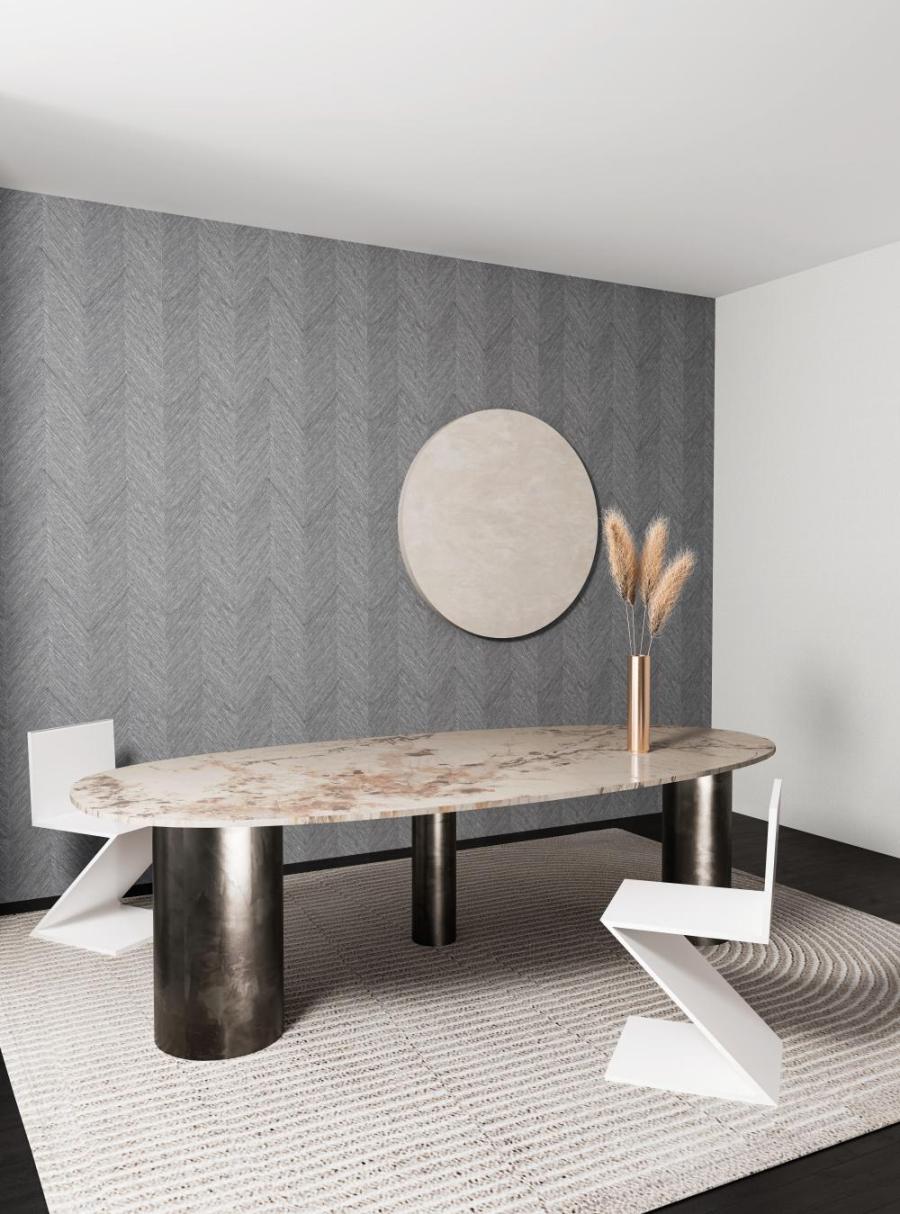
Details
Attention
Installation Guidelines:
I. Tool Selection
Short-nap roller: A short-nap roller is essential to achieve a thin, even adhesive layer.
Slip sheet for double-cutting: When installing heavyweight, silk-effect wallcoverings or working on surfaces with questionable adhesion, use a slip sheet behind seams to prevent lifting after double-cutting.
II. Moisture Control
If linen wallcoverings absorb too much water, the backing expands while the linen face tends to shrink. This tension creates a pull-back effect that causes edge curling during installation. If the adhesive dries too slowly, seams may even curl by the following day.
Excessive moisture can also cause the backing to bubble, making installation difficult.
Moisture management is therefore critical: limit the amount of water absorbed by the wallcovering and speed up adhesive drying to create immediate bond strength and prevent curling.
Control adhesive moisture: Many manufacturers now recommend thick paste, thin application. What consistency is ideal?
1. For standard ready-mixed pastes, a water-to-paste ratio of roughly 1:0.8 to 1:1. The mixed adhesive should hold on the roller without dripping and form a stringy, gel-like consistency.
2. Use only ready-mixed clear paste; do not blend with powder additives, as these introduce excessive water and reduce the paste's tack.
Control adhesive thickness: For linen wallcoverings, the paste-the-wall method with dry hanging is recommended. Use a short-nap roller to spread the thick paste evenly and thinly on the wall—aim for a film about 1mm thick.
III. Delayed Seaming and Double-Cutting
To avoid gaps or white-lining caused by shrinkage, use a delayed seaming and double-cutting technique. Typically allow 15–20 minutes before trimming the seam.
Depending on the material thickness and substrate strength, decide whether a slip sheet for double-cutting should be used to prevent seam lifting if the substrate is not completely sound.
IV. Seam Finishing
Linen surfaces must not come into contact with water or adhesive, as they will leave permanent stains or watermarks. During installation, be extremely careful to avoid adhesive bleed-through and never wipe seams with a damp cloth.
After double-cutting, if additional adhesive is needed, use a broad taping knife to apply a thin, even layer. This technique prevents over-application and avoids squeeze-out when using a seam roller.


