
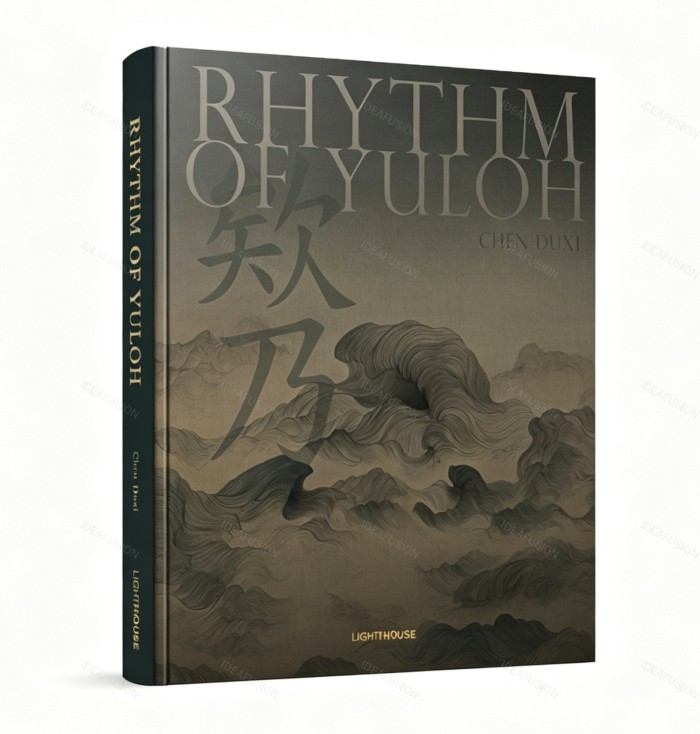


Rhythm of Yuloh: English Edition 4

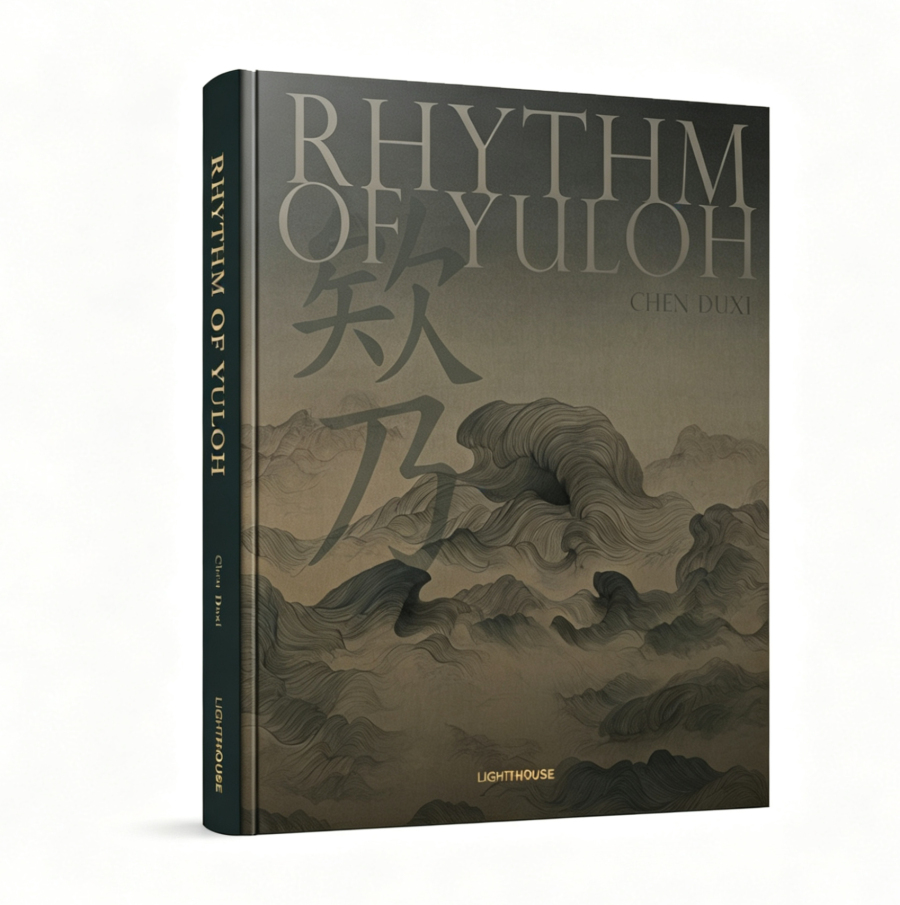
Details
RHYTHM OF YULOH (Chinese title: Ai Nai) is a new art book by contemporary artist Chen Duxi. Taking “Ai Nai”—the sound of the traditional yuloh—as its title, it echoes Chen’s origins in the water-rich Sichuan region and his deep study of traditional Chinese culture, spanning art, philosophy, music, and beyond, as well as his artistic expression of it.
His signature “Chiyi” and “Ergong” series move from the metaphor of water to the philosophy of the line. Through the ebb and flow of dense and sparse lines and the modulation of color values, they explore the continuity of time, the fluidity of nature and life, and the subtle dynamic between observer and observed. They bring together the infinite possibilities of body, nature, and space, infusing the image with distinctive dynamic tension. “Ergong” celebrates the diversity of all things and the body as language, while “Chiyi” turns inward, seeking a meditative distillation of all things into one. Together they form a complementary yin-yang relationship: “Ergong” expands outward to embrace the infinite possibilities of the external world, while “Chiyi” contracts inward to probe the essence and order of the subjective world. Restraint and expansion, microcosm and macrocosm, opposition and unity—these seemingly contradictory themes are continually transformed and balanced in Chen Duxi’s work, ultimately constructing a complete and profound philosophical framework.
Through this book, we hope to present Chen Duxi’s systematic aesthetic paradigm and artistic practice, built around Eastern artistic conception, and to commit to paper his contemplation of life, his search for essential laws, and his connections between structures of cognition.


