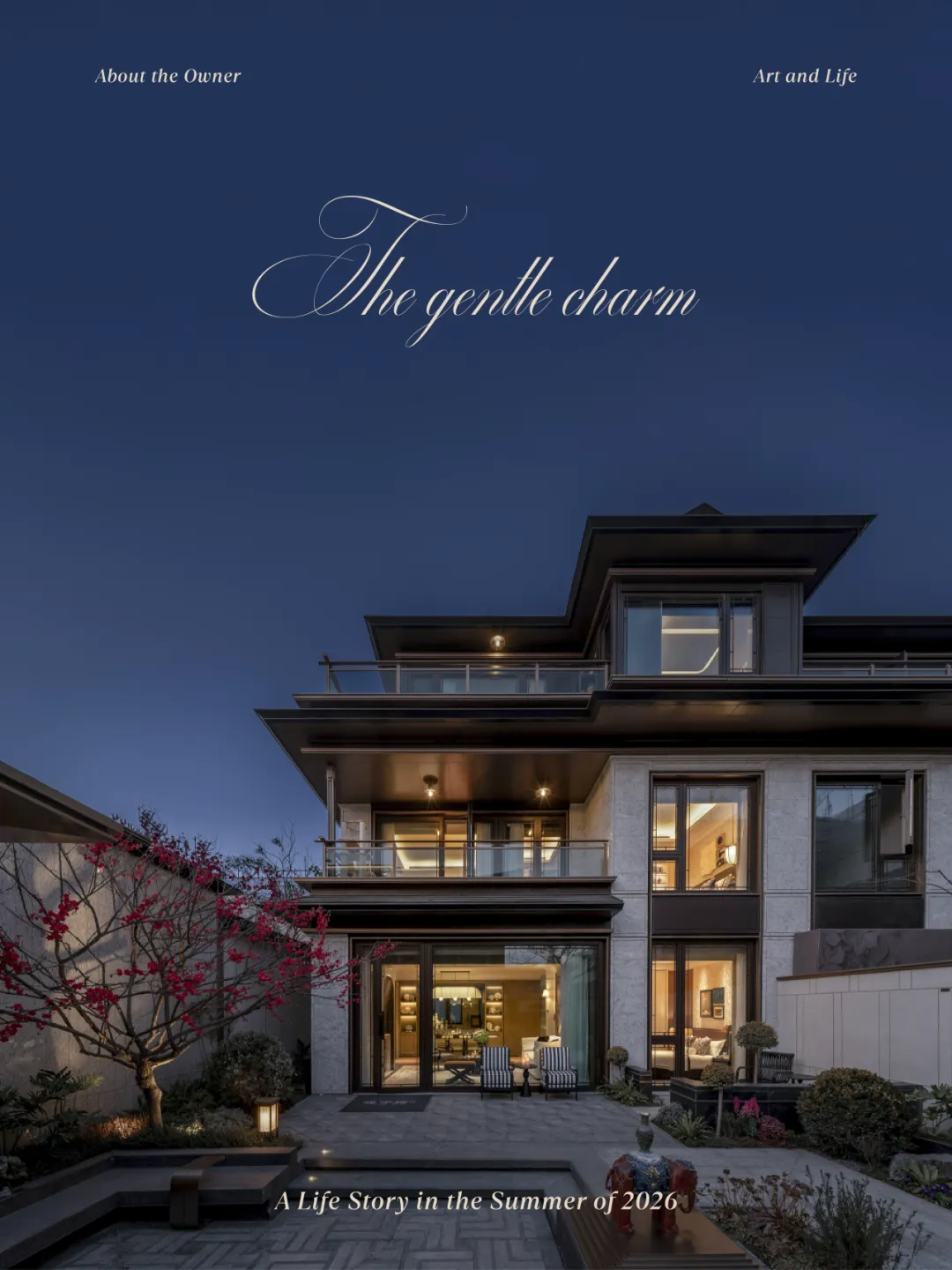
CCD·ENSUE HOME | A Courtyard, Half of Shanghai


🔻 Living Room
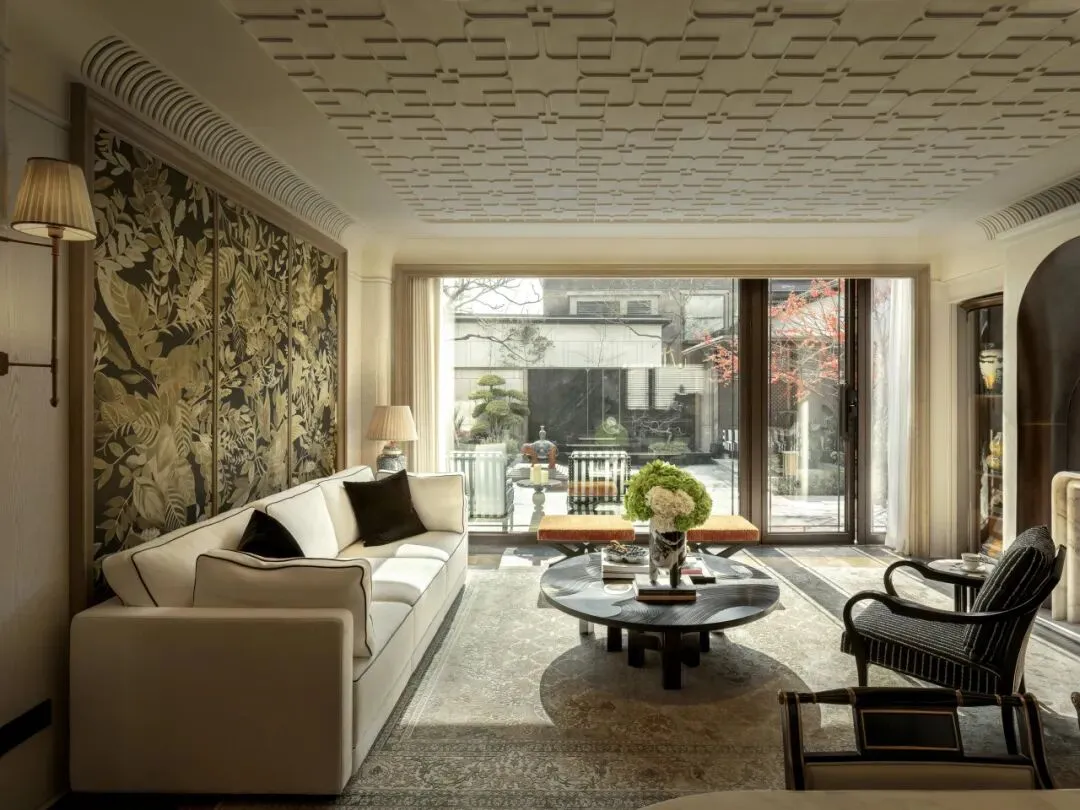
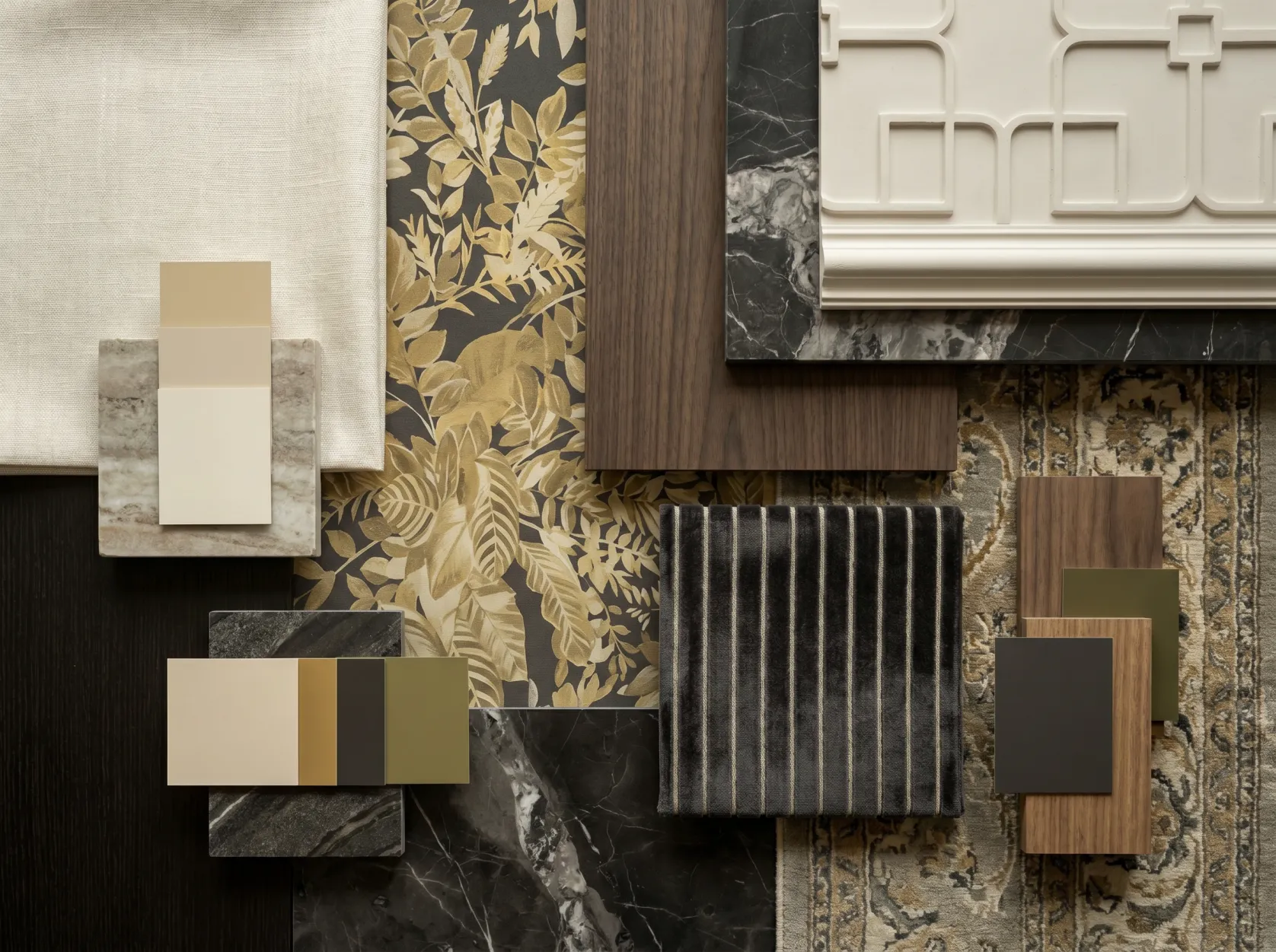
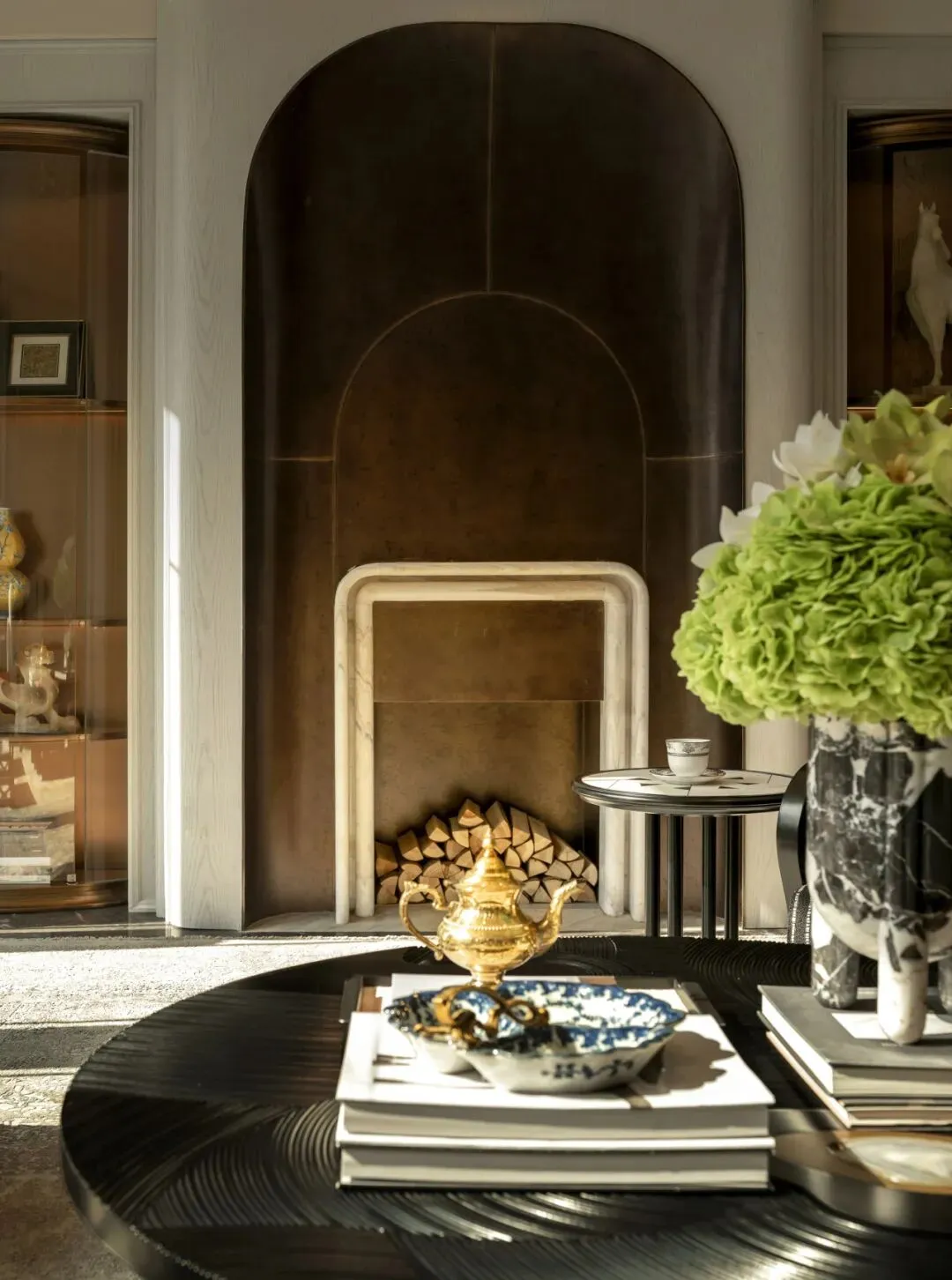
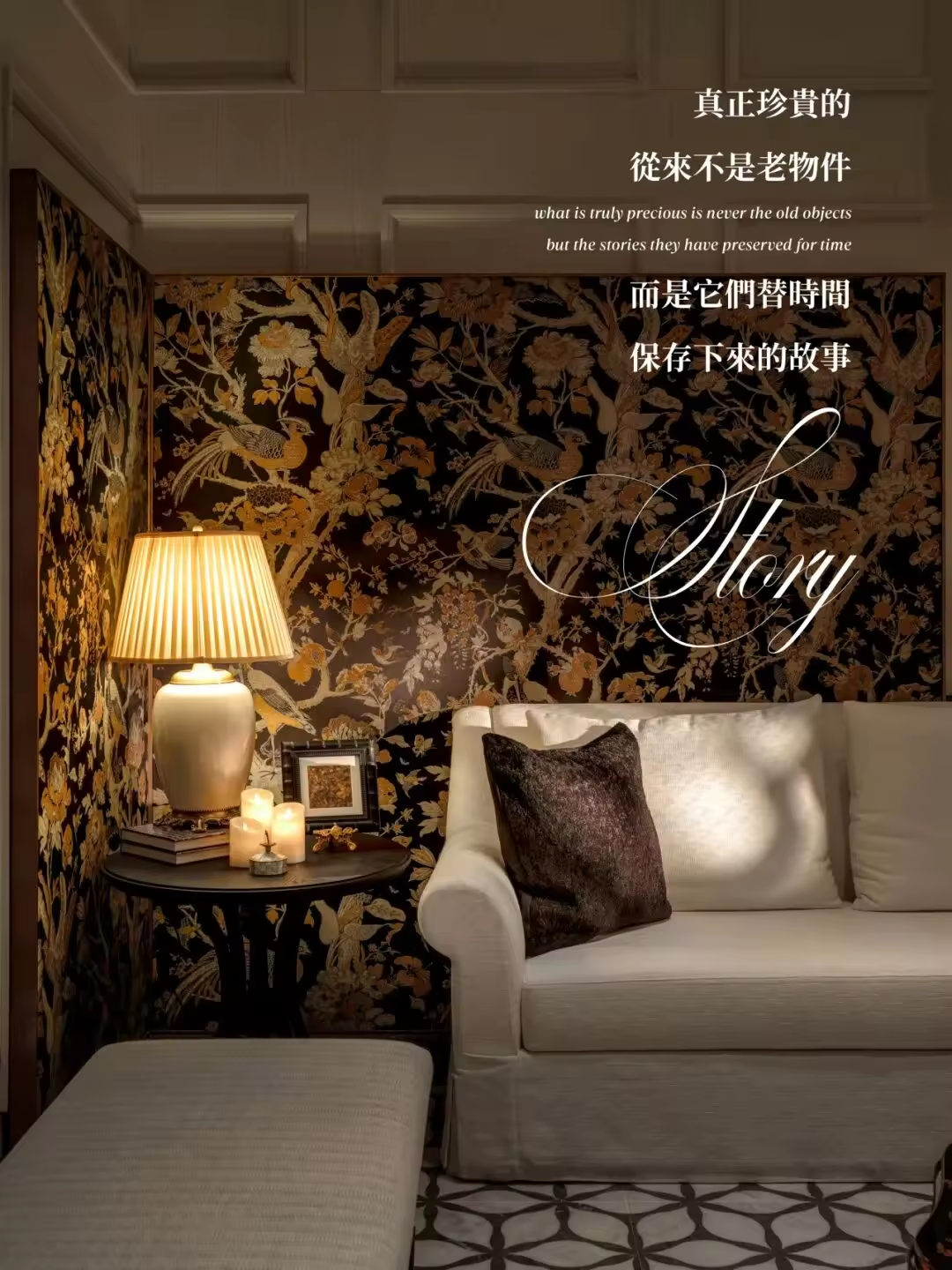
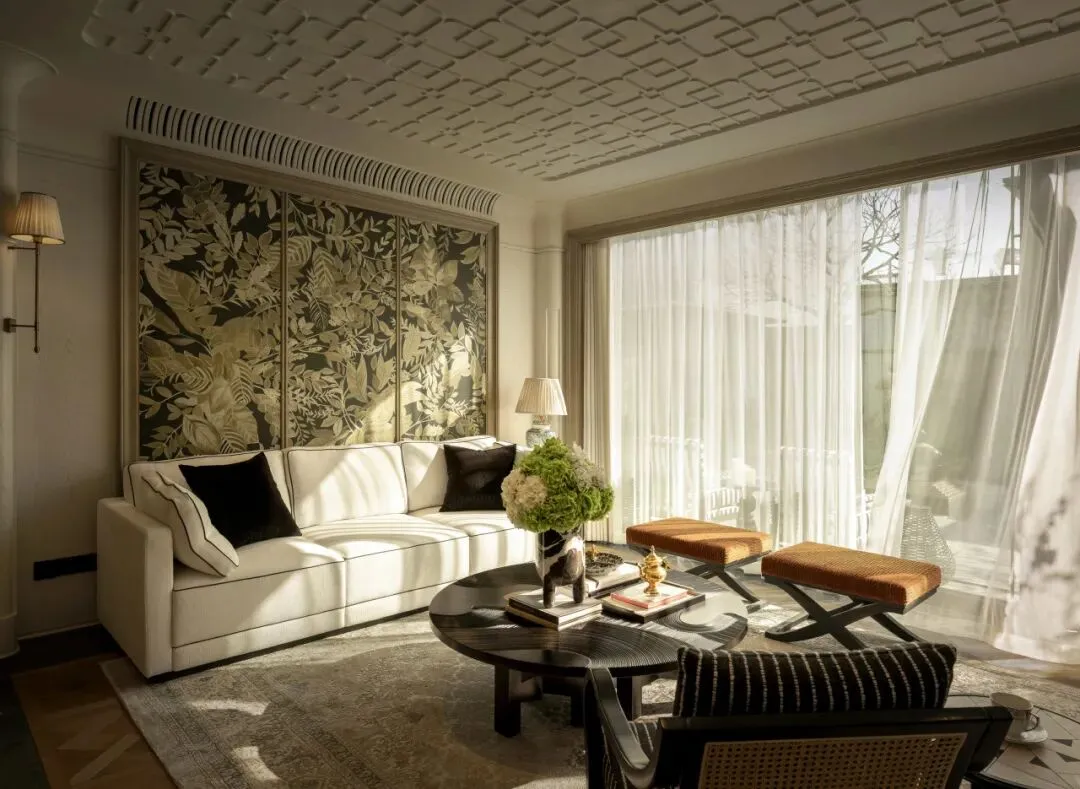
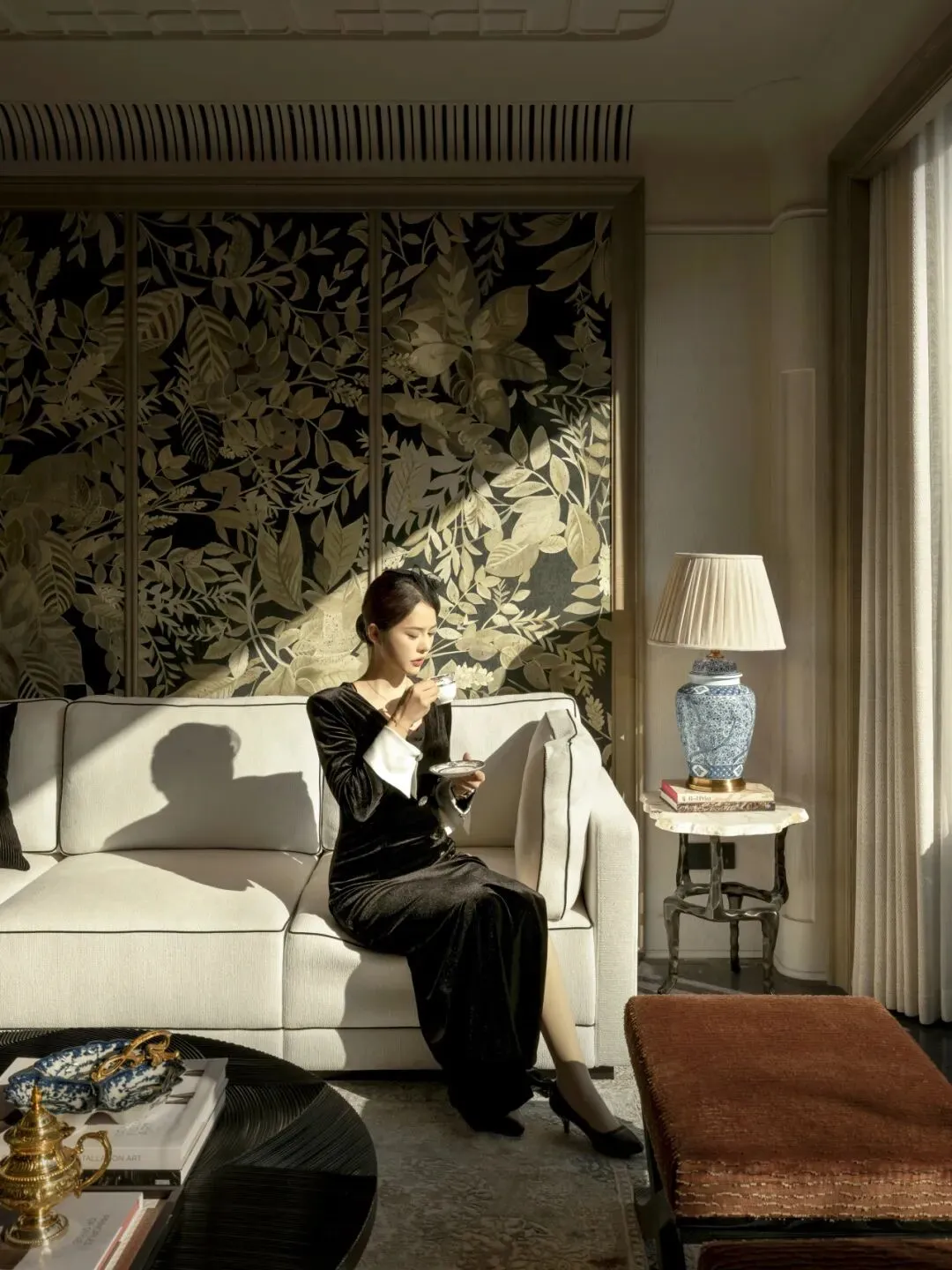
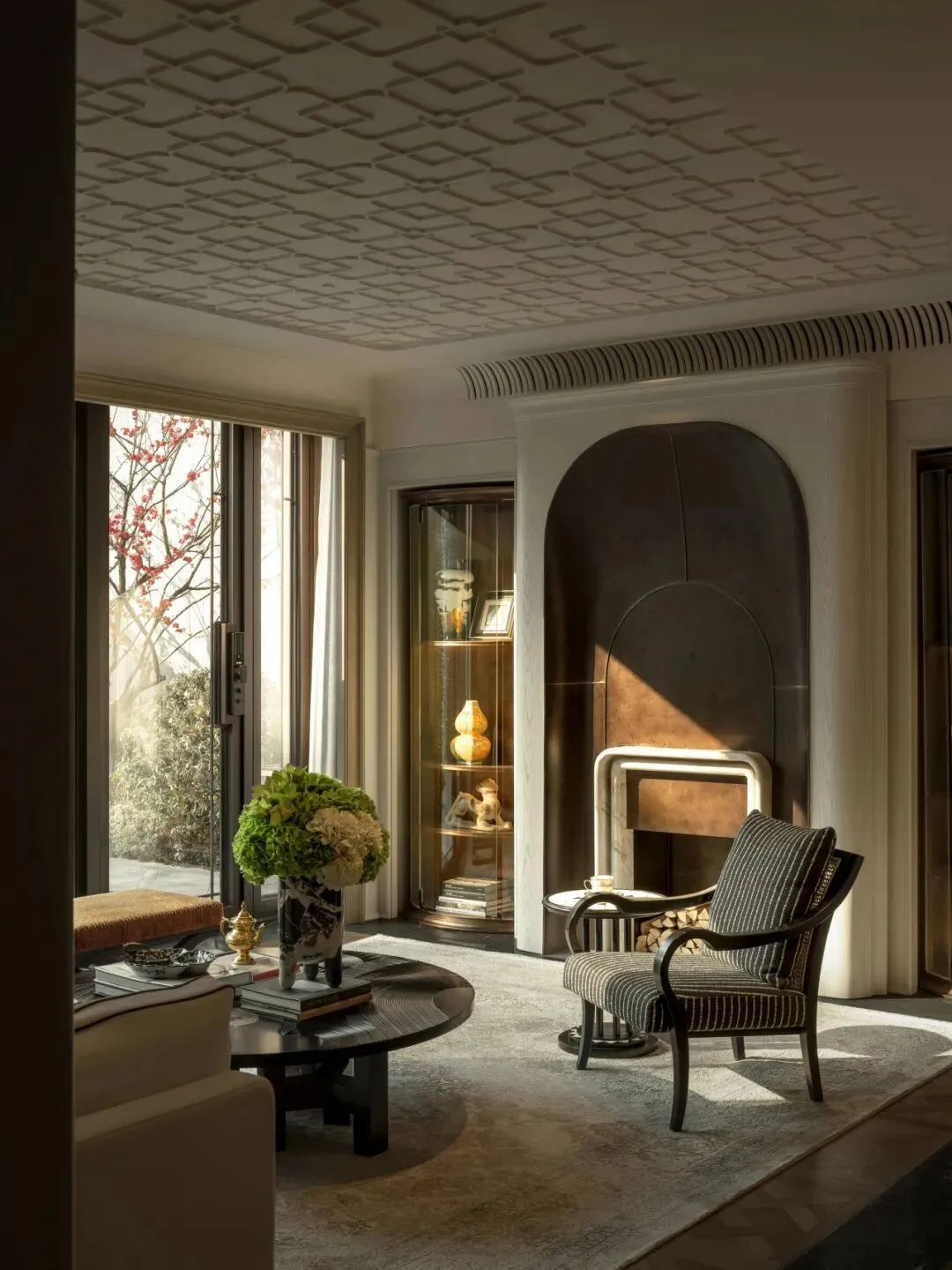
In the living room, a sofa in creamy white tones encloses a comfortable area. The cushions are in black-green, like the color of window frames in old buildings on the Bund—quiet yet substantial. The coffee table is black, with inlaid metal and agate cloud details, as if waiting to be discovered and admired.
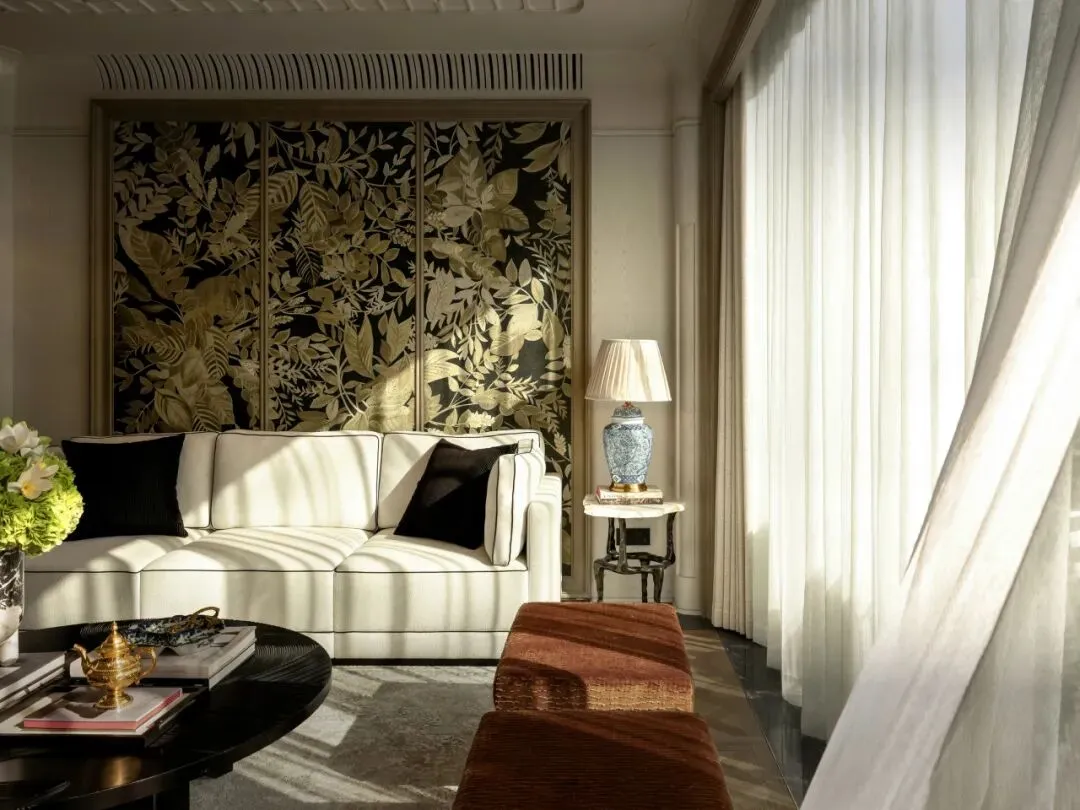
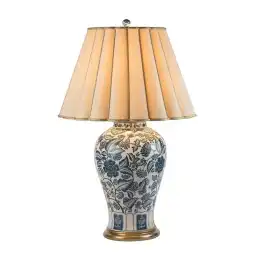
What truly defines the space, however, are the blue-and-white porcelain lamps flanking the sofa. Patterns of scrolling lotus in cobalt blue spread across the white ground, each stroke clear and strong. The lampshades are of plain silk; when light passes through, the painted motifs on the porcelain surface appear deeper, like the everyday moments steeped in time within an old residence.
The male host says, 'Blue-and-white is not a mere ornament. It is part of Shanghai life.'
 |  |
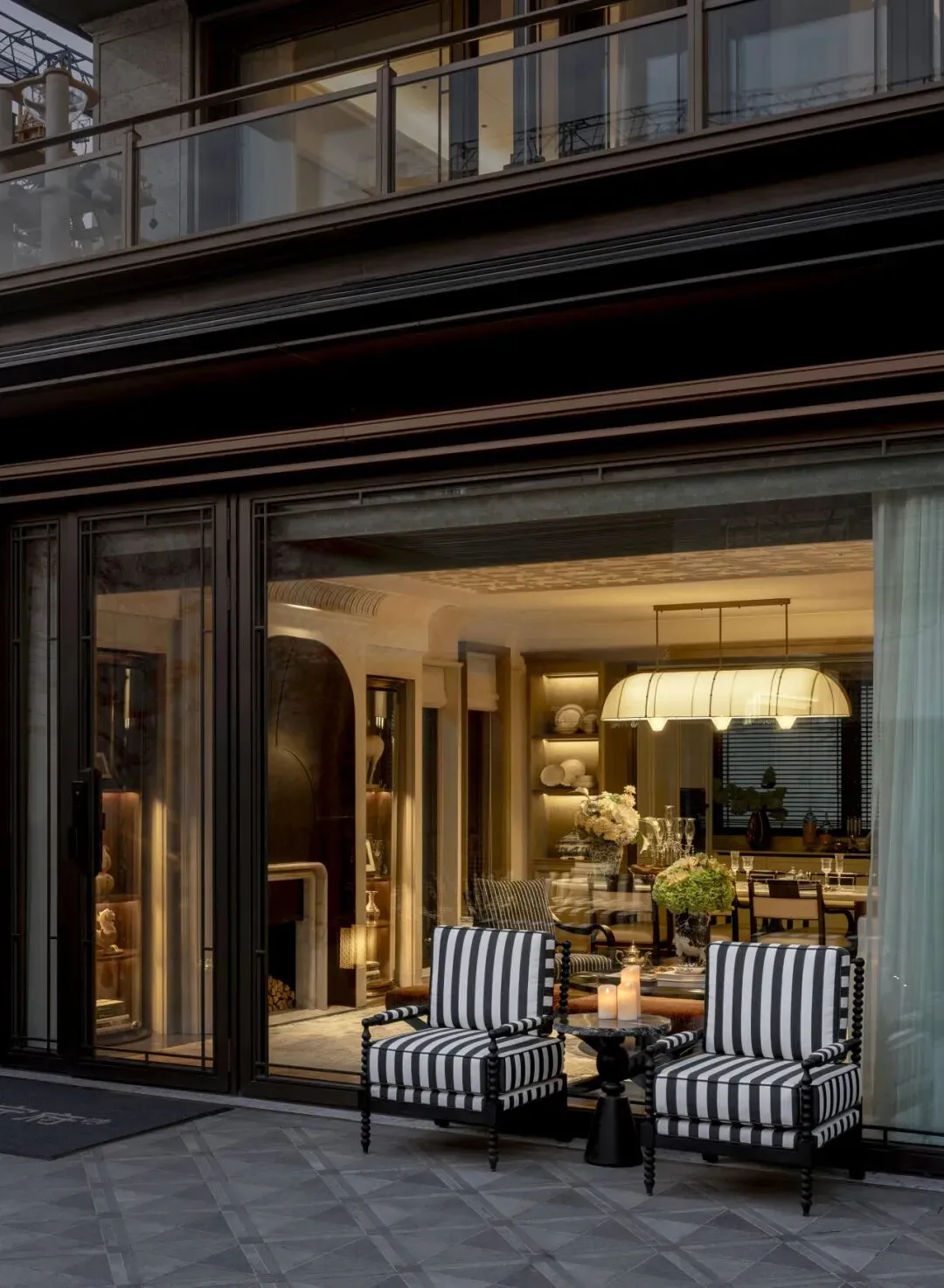
There is no partition between the living and dining areas; the sightline extends all the way to the dining table and the courtyard outside the window.
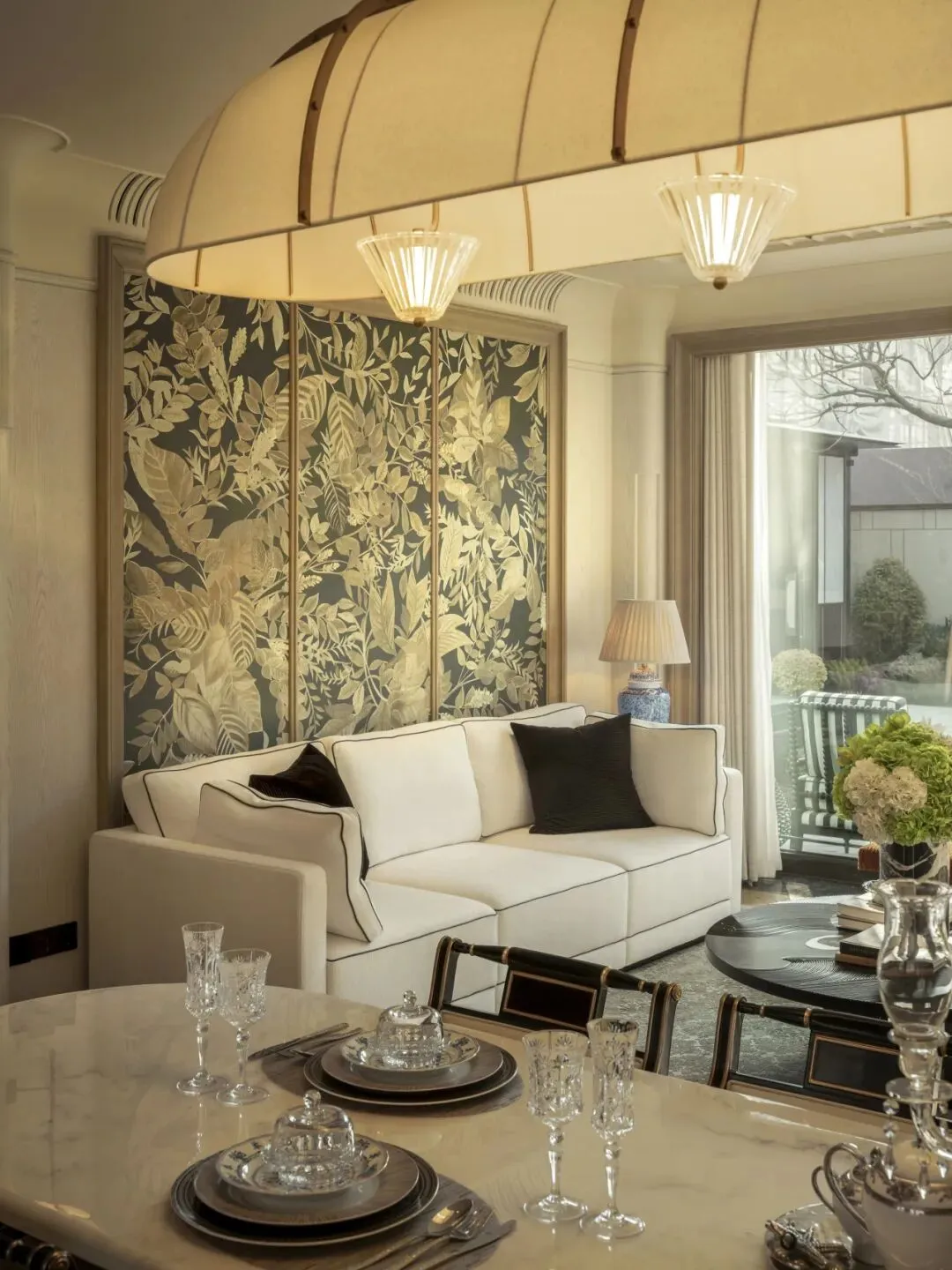
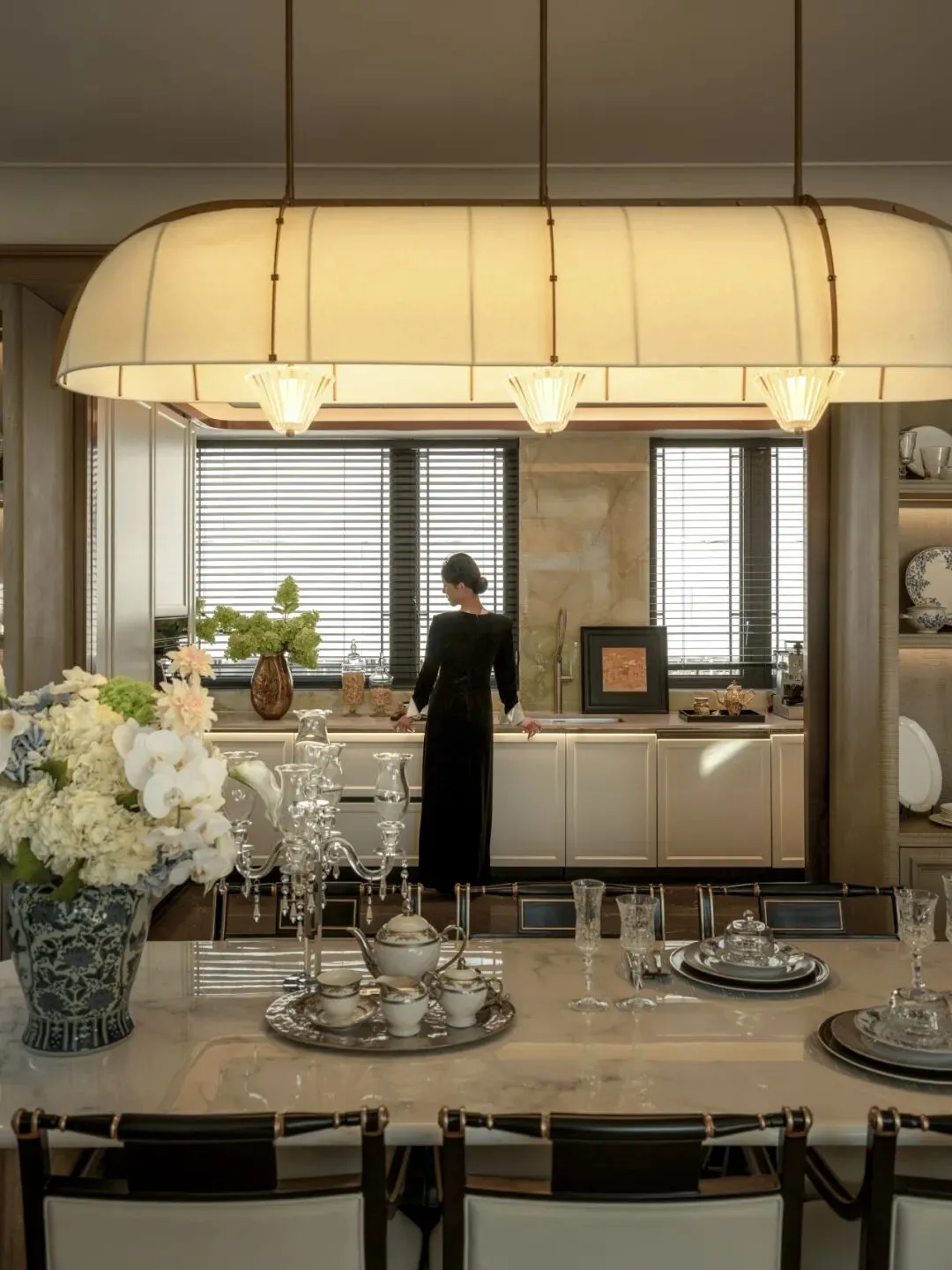
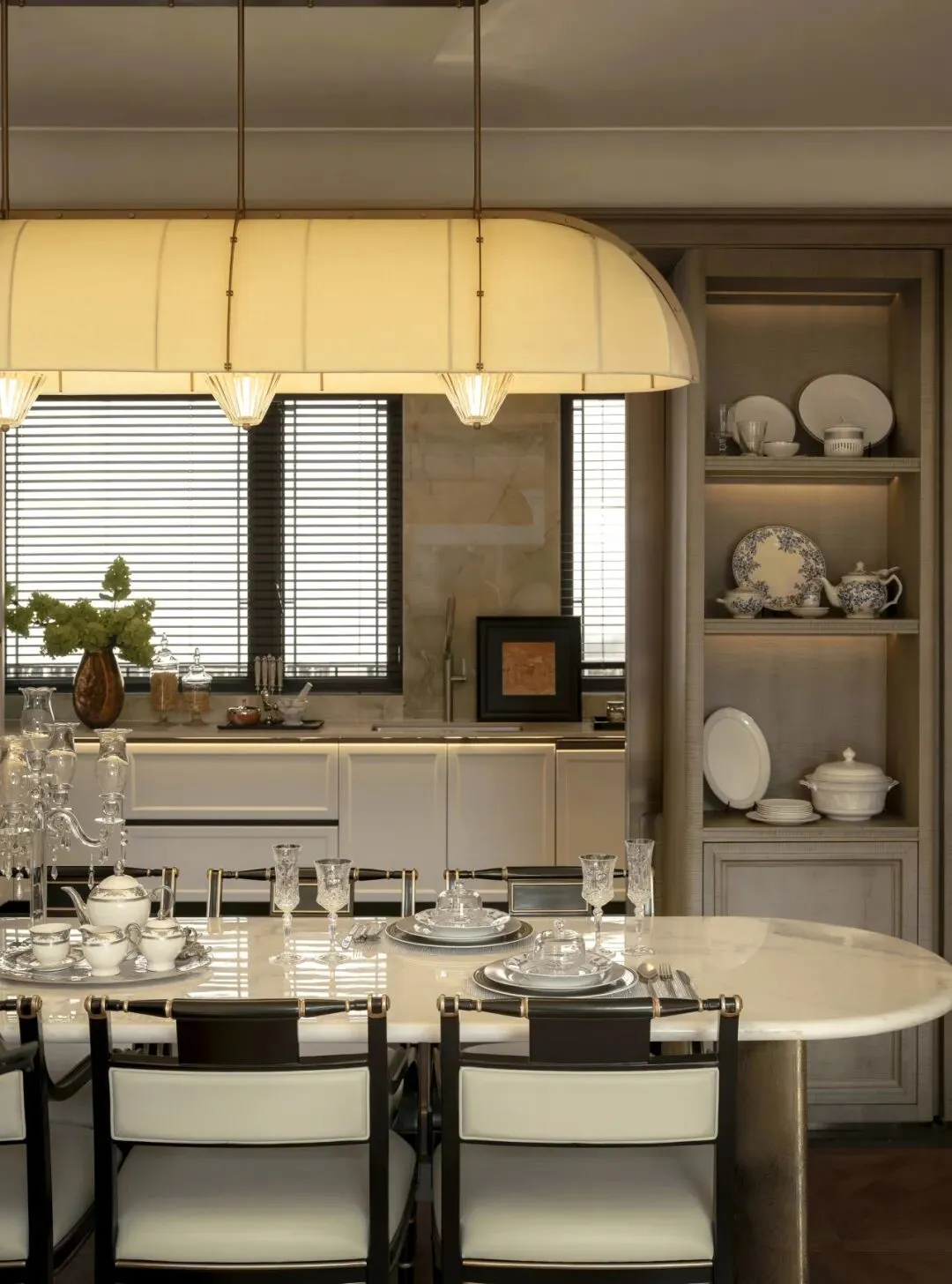
The dining table features a marble top with an art-paint base. The natural stone veining and the tactile quality of the hand-applied lacquer engage in a subtle dialogue. Most arresting on the tabletop is a set of blue-and-white porcelain bowls and dishes of varying sizes, their glaze warm and lustrous. The male host deliberately places them alongside everyday tableware. 'I want them to be seen, and also to be used.'
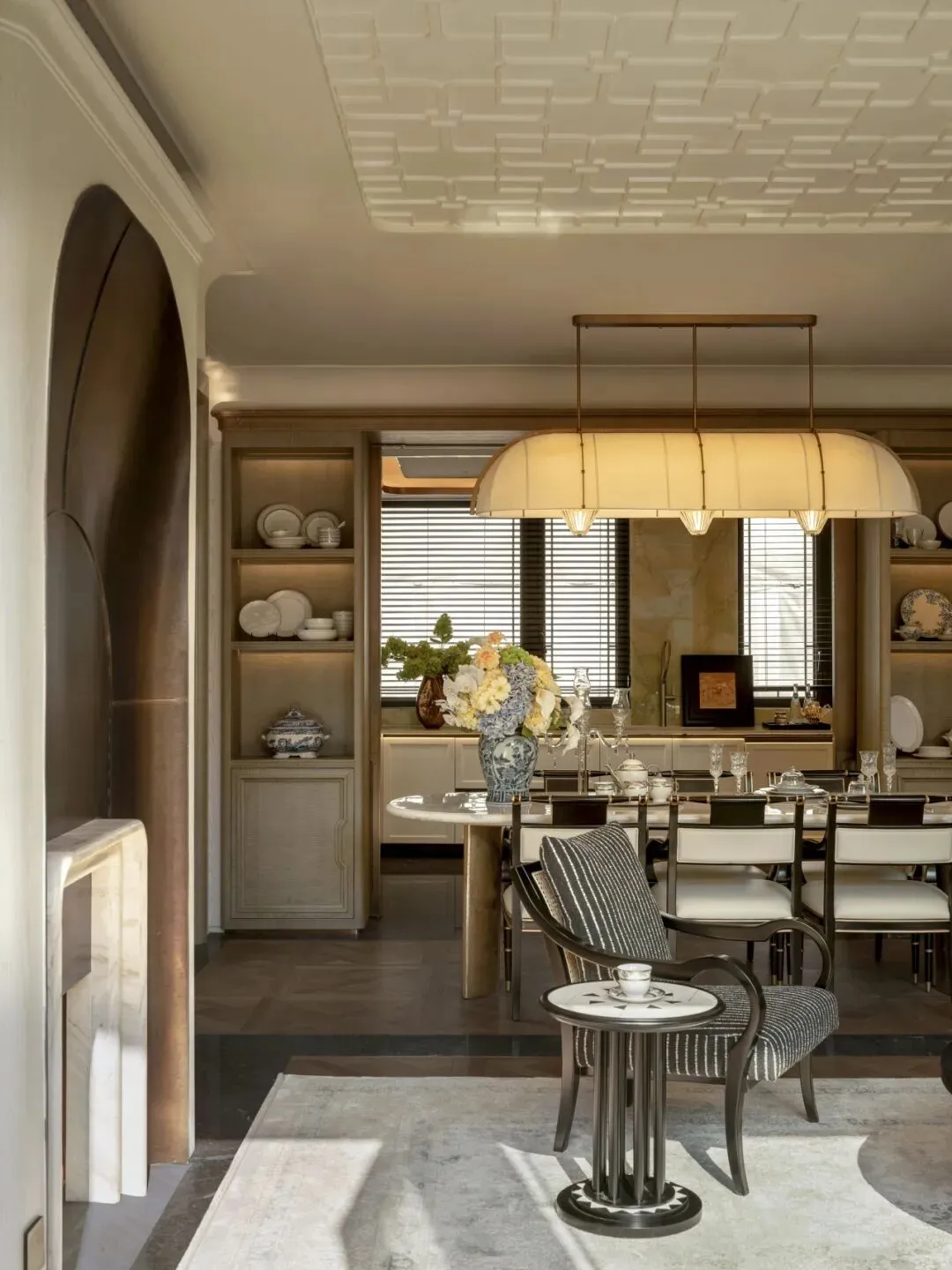
The female host's flower vase is also blue-and-white—a small plum vase holding a few seasonal blooms. In the era when Soong Ching-ling lived, floral art embraced a blend of East and West; Eastern branches paired with Western vases created a Shanghai flavor. The coolness of the blue-and-white and the softness of the flowers together form a restrained vitality.
The finest blue-and-white porcelain is not something to be stared at behind a glass cabinet. It is something to eat with, arrange flowers with, sleep beside, and wake up to—letting six centuries of cobalt blue keep you company through daily life in Shanghai.
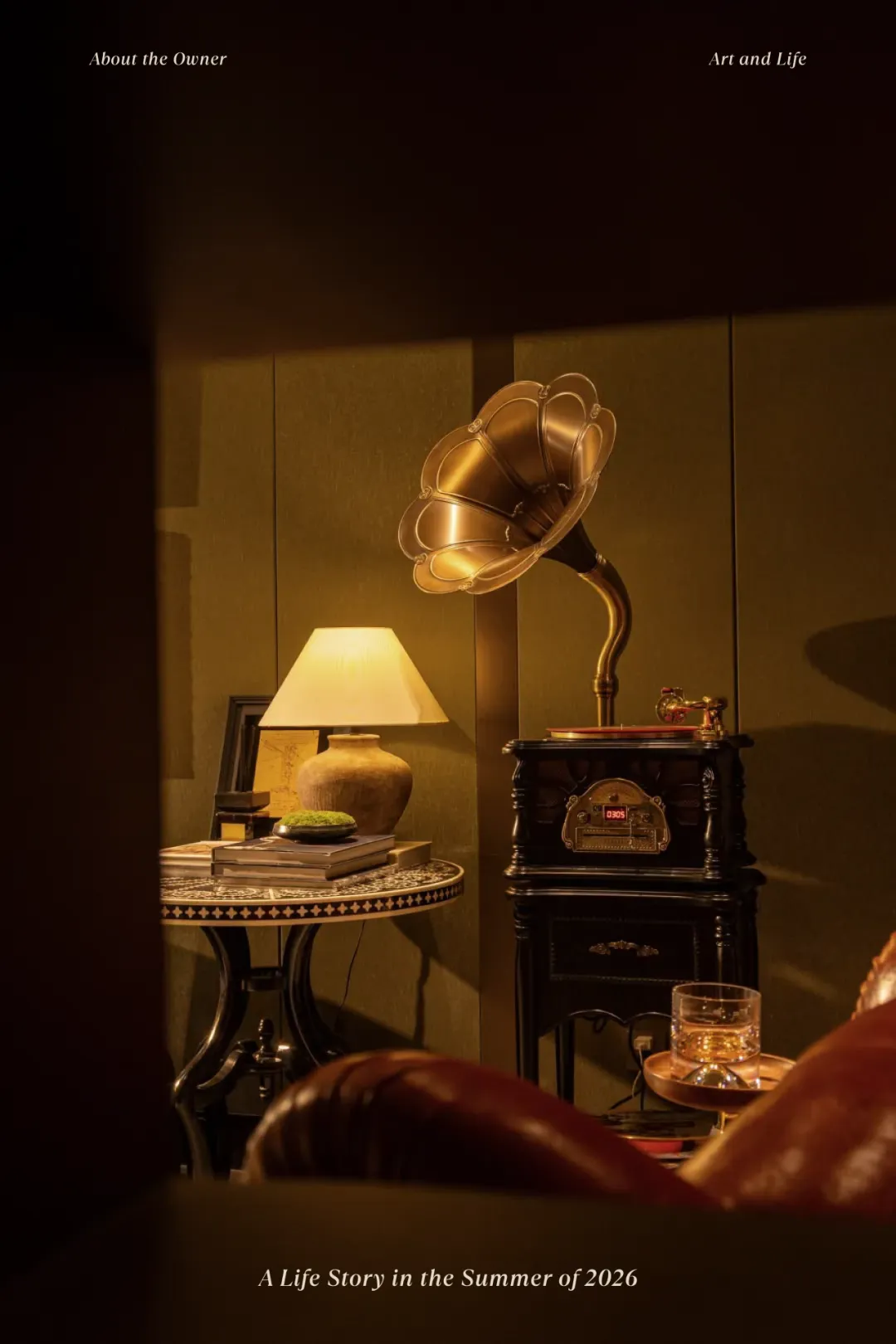
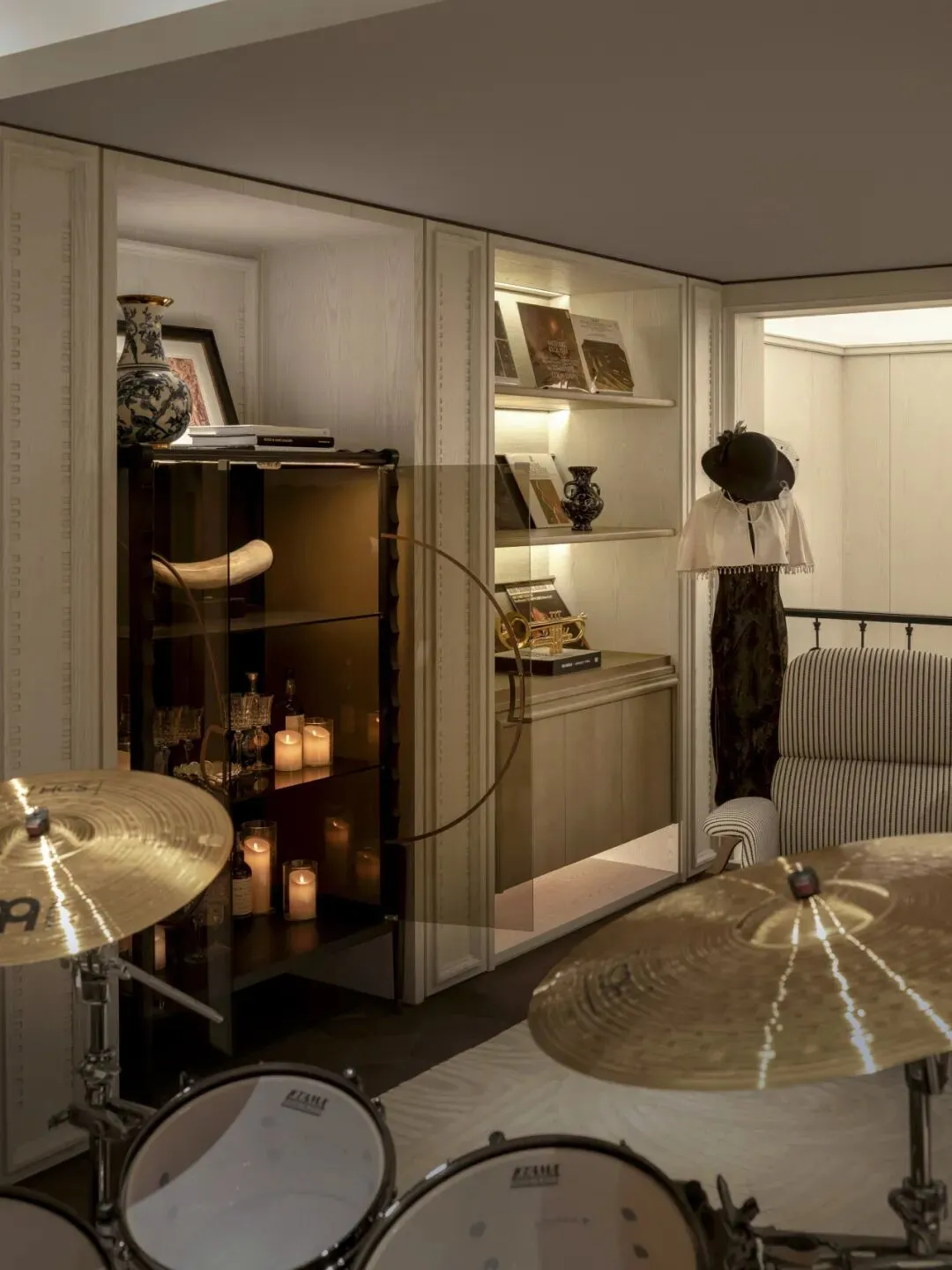
A piano, a vinyl record player, a drum kit. This is the female host's music hall, not large, with soundproofing on the walls so as not to disturb the quiet upstairs, but here both sound and memory find their own destinations.
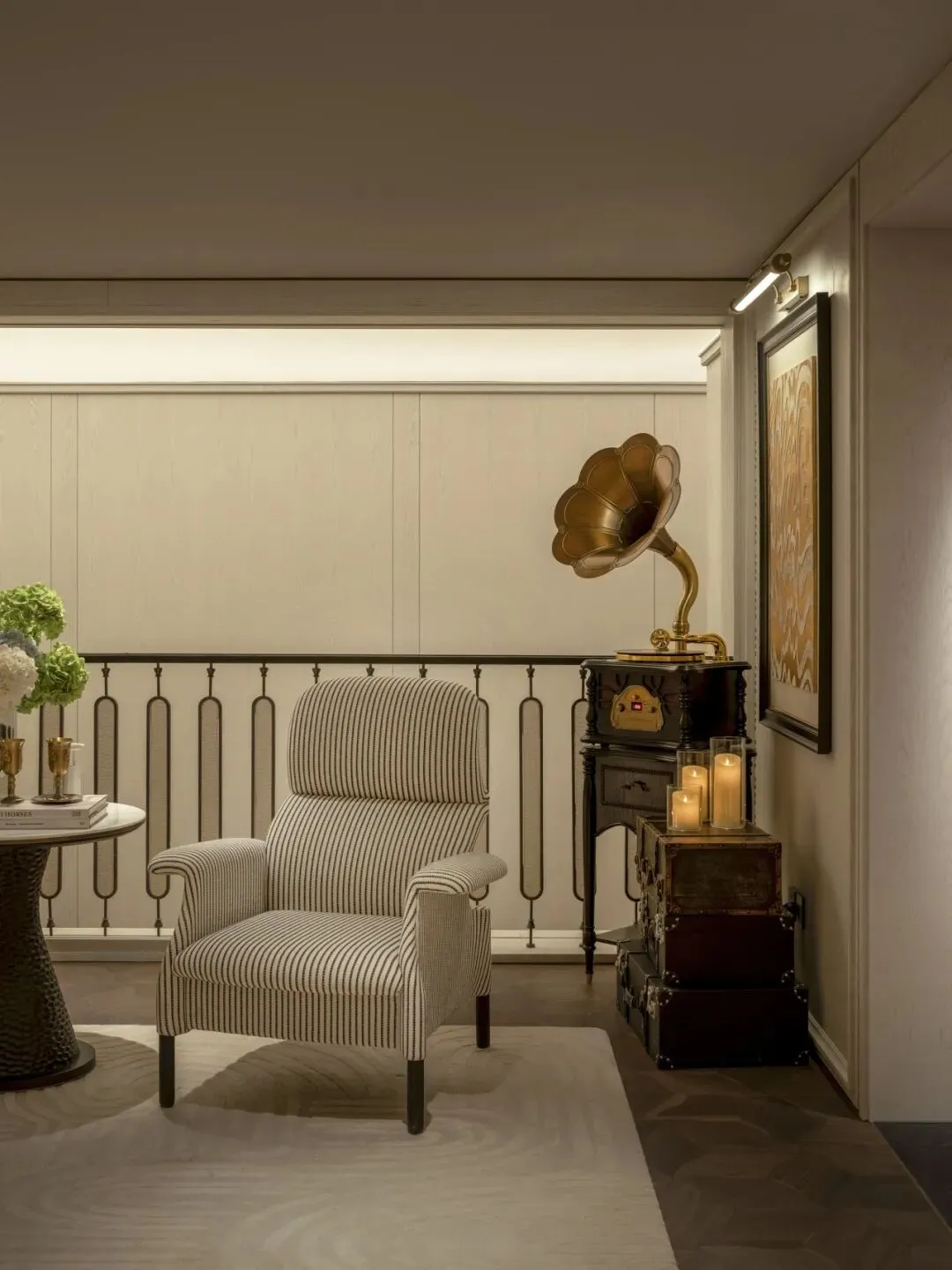
The piano stands against the wall, with the drum set facing it. Two instruments, two voices, echoing each other in the same space. She says sometimes she plays a slow, soothing piece, and other times she strikes a powerful rhythm. When the mood strikes, music is the best outlet.
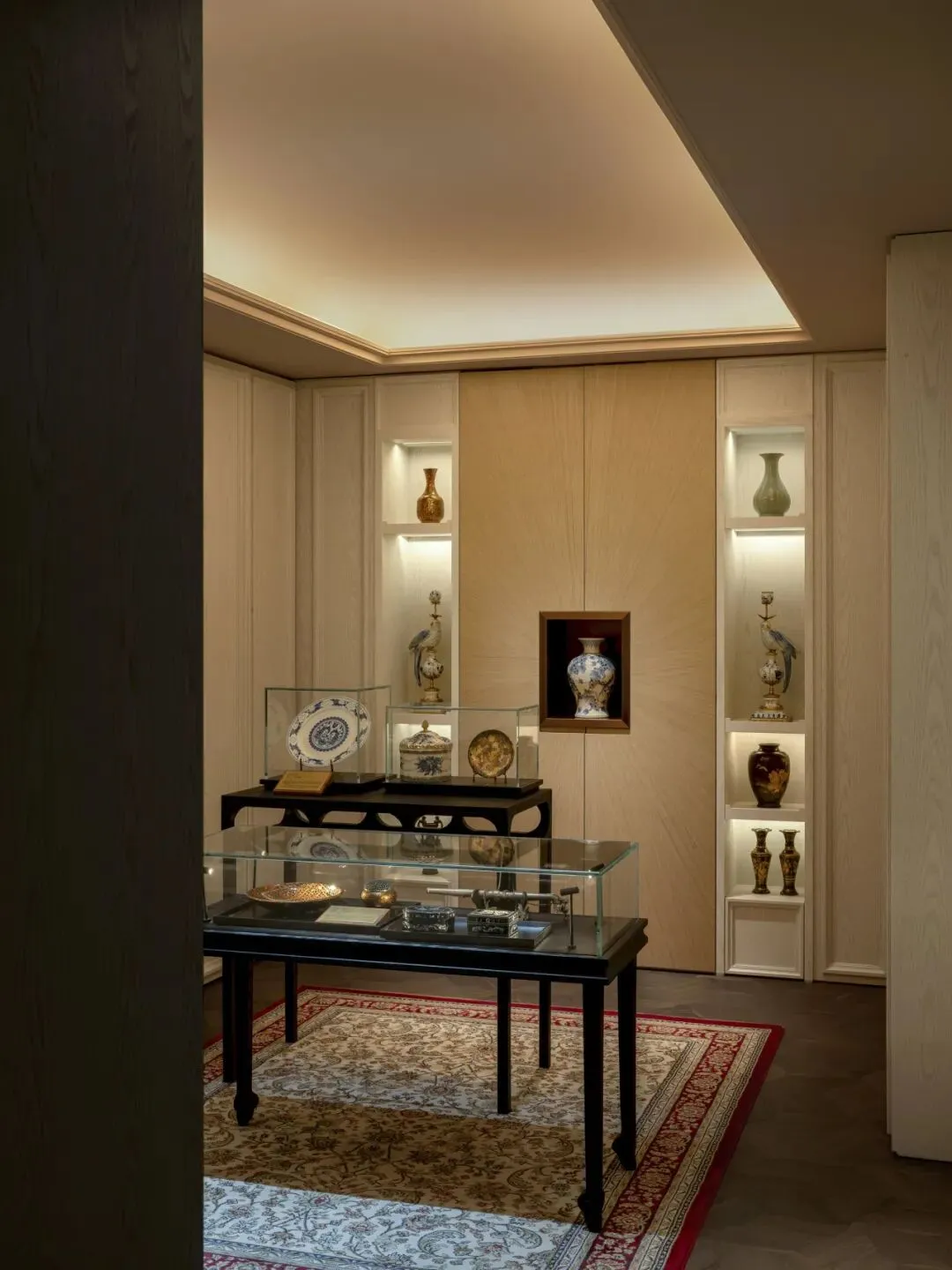
The mezzanine also holds a special feature: a family honor display area. The warmth of lacquerware, the clarity of blue-and-white porcelain, the simplicity of pottery, and the elegance of calligraphy and painting—several pieces of Shanghai-style art treasures are displayed in an artful arrangement. Light falls from the side, making the surface textures and brushstrokes clearly visible.
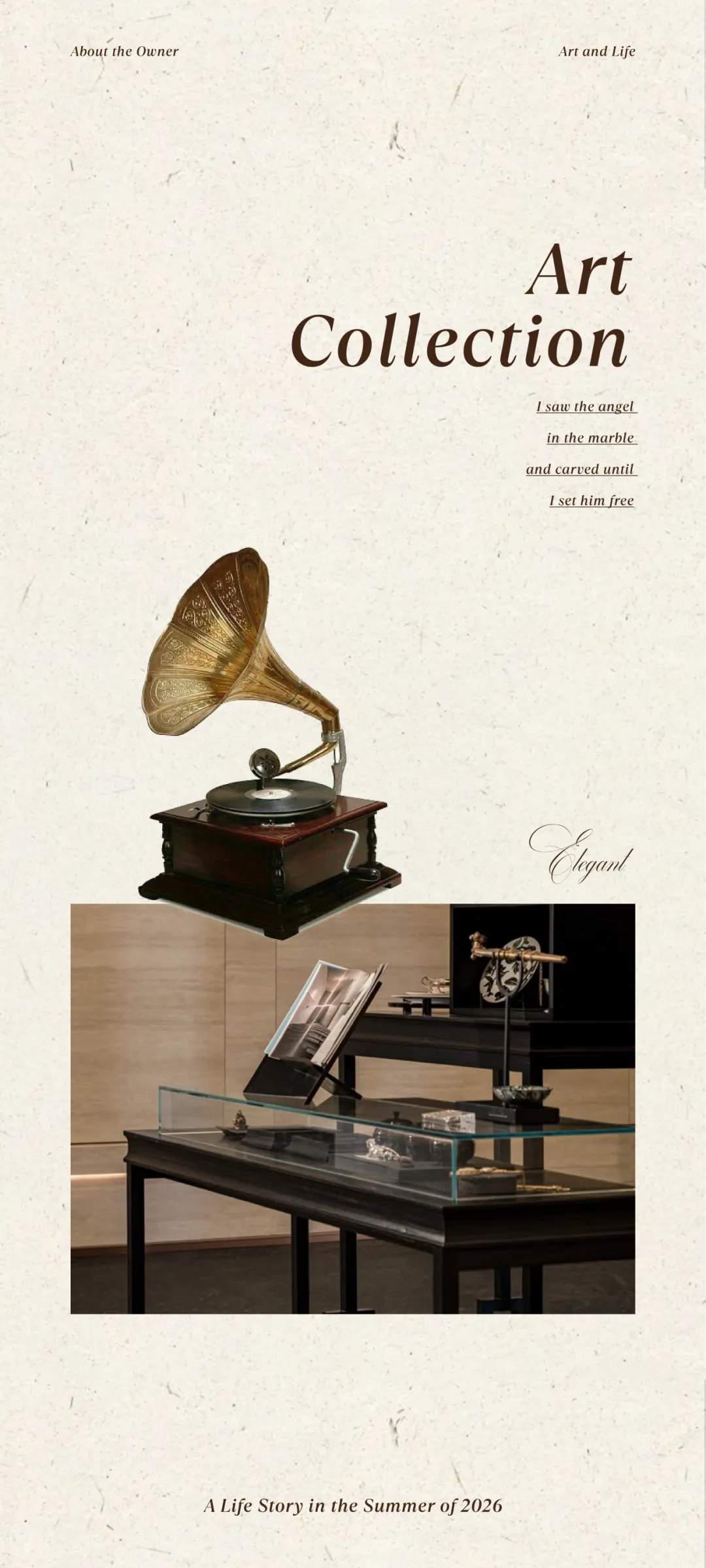
The male host says these items are not extraordinarily precious, but each has a story. Some were chance finds at auctions, others were parting gifts from friends. 'They remember those moments worth remembering for me.'
Music flows; artifacts stand still. One is for release, the other for quiet contemplation. Here in this mezzanine, they exist peacefully, not disturbing one another, yet together they build the depth of this home.
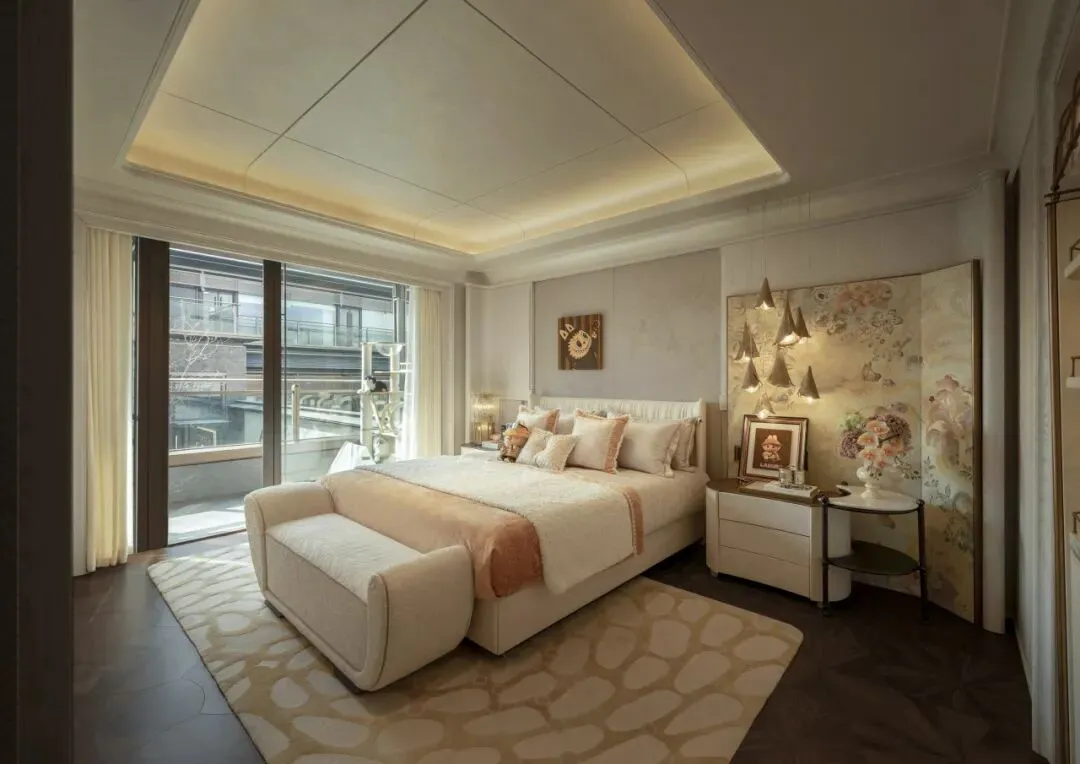
The client's daughter is in university. Her room eschews pink for a gentle beige. The highlight is the designer combination chandelier, with a Shanghai-style patterned screen behind it. The bedside table of leather and metal, the picture frame on the corner side table, the cartoon decorative painting on the wall—you can tell, after all, it is still a child's heart.
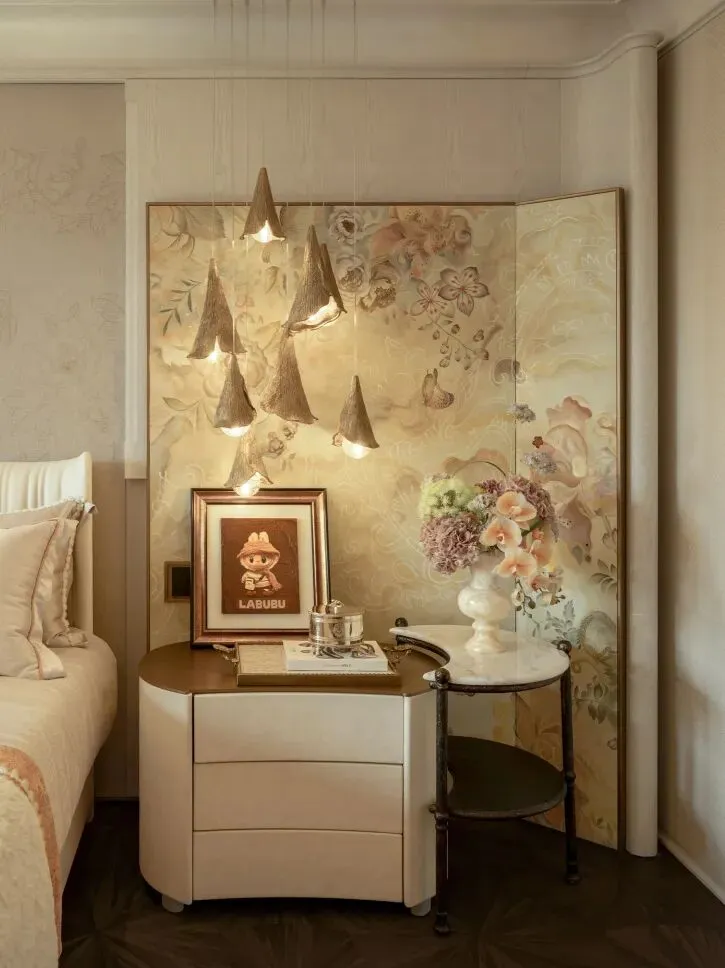
'She has her own sense of aesthetics,' says the male host, 'she doesn't need us to arrange things for her.'
🔻 Children's Room
Their son is 15, into technology and cyberpunk. His room features a low-saturation, black-and-white base—calm, not childish. A calligraphy-textured art installation hangs on one wall, next to a few minimal ornaments. The desk is by the window, where the light falls just right on the surface. The connected 'study–bedroom' layout allows him to sit quietly at the desk or return to bed and continue to ponder.
The male host says, 'A boy at this age needs his own world.'
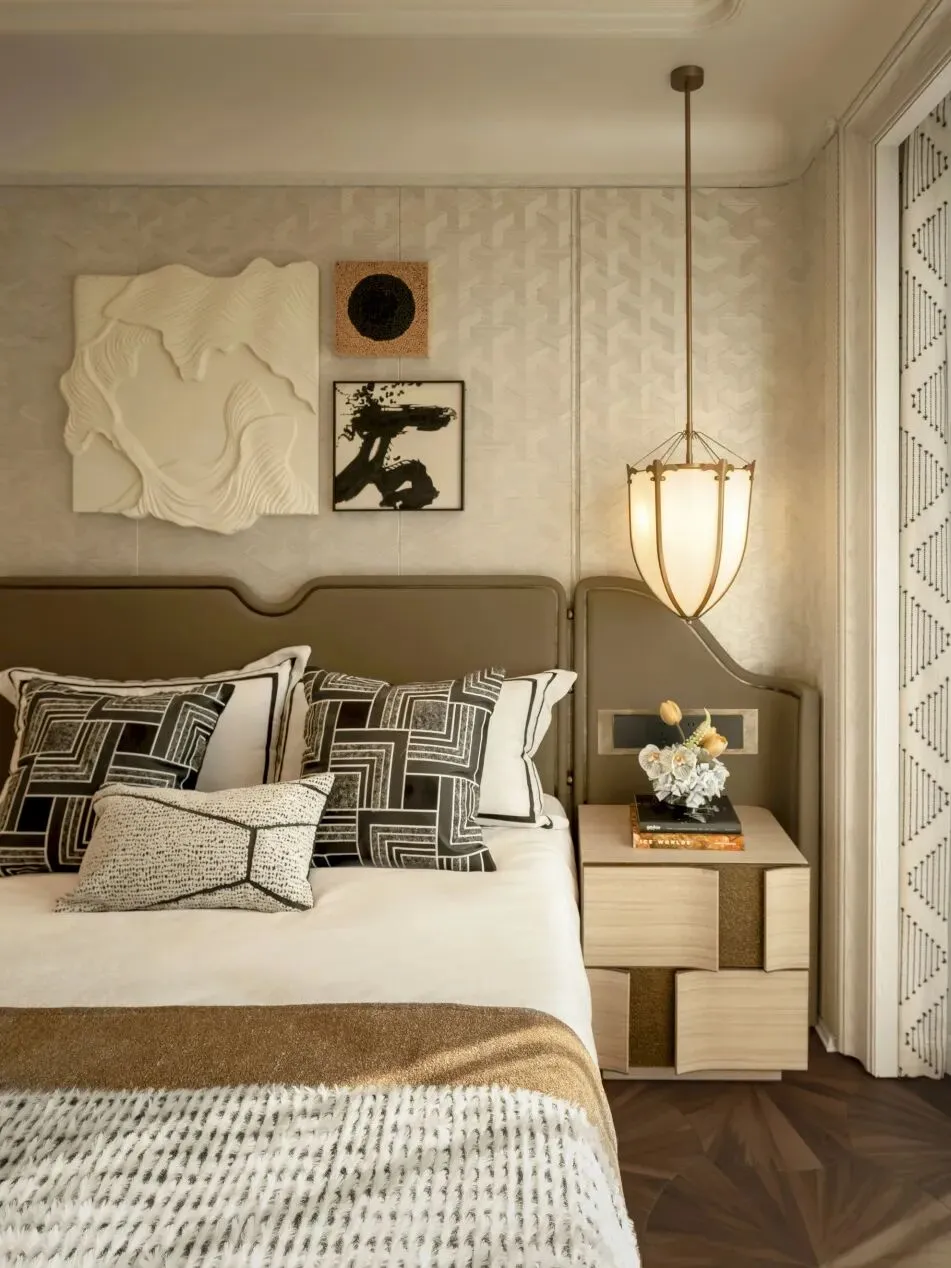
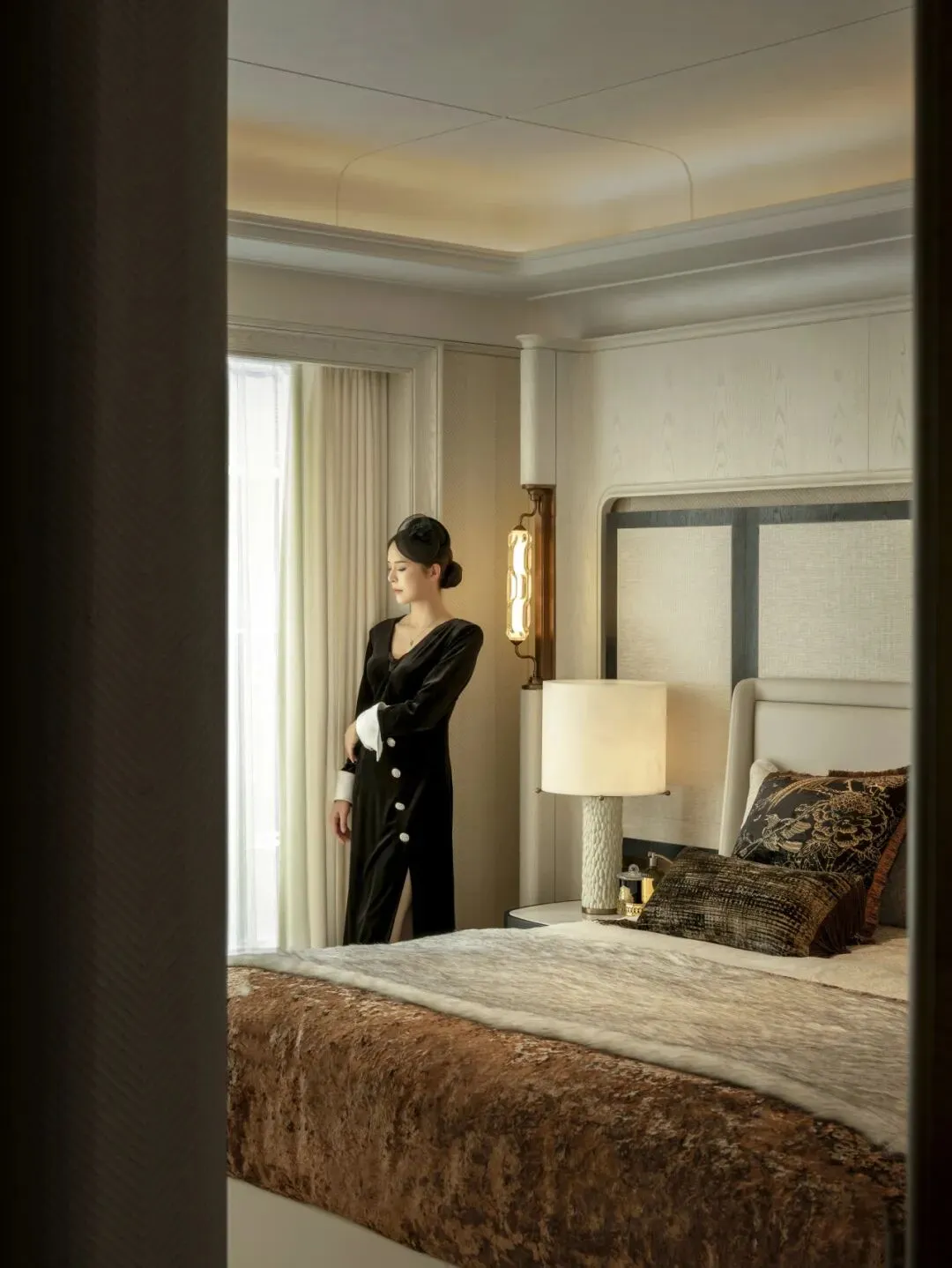
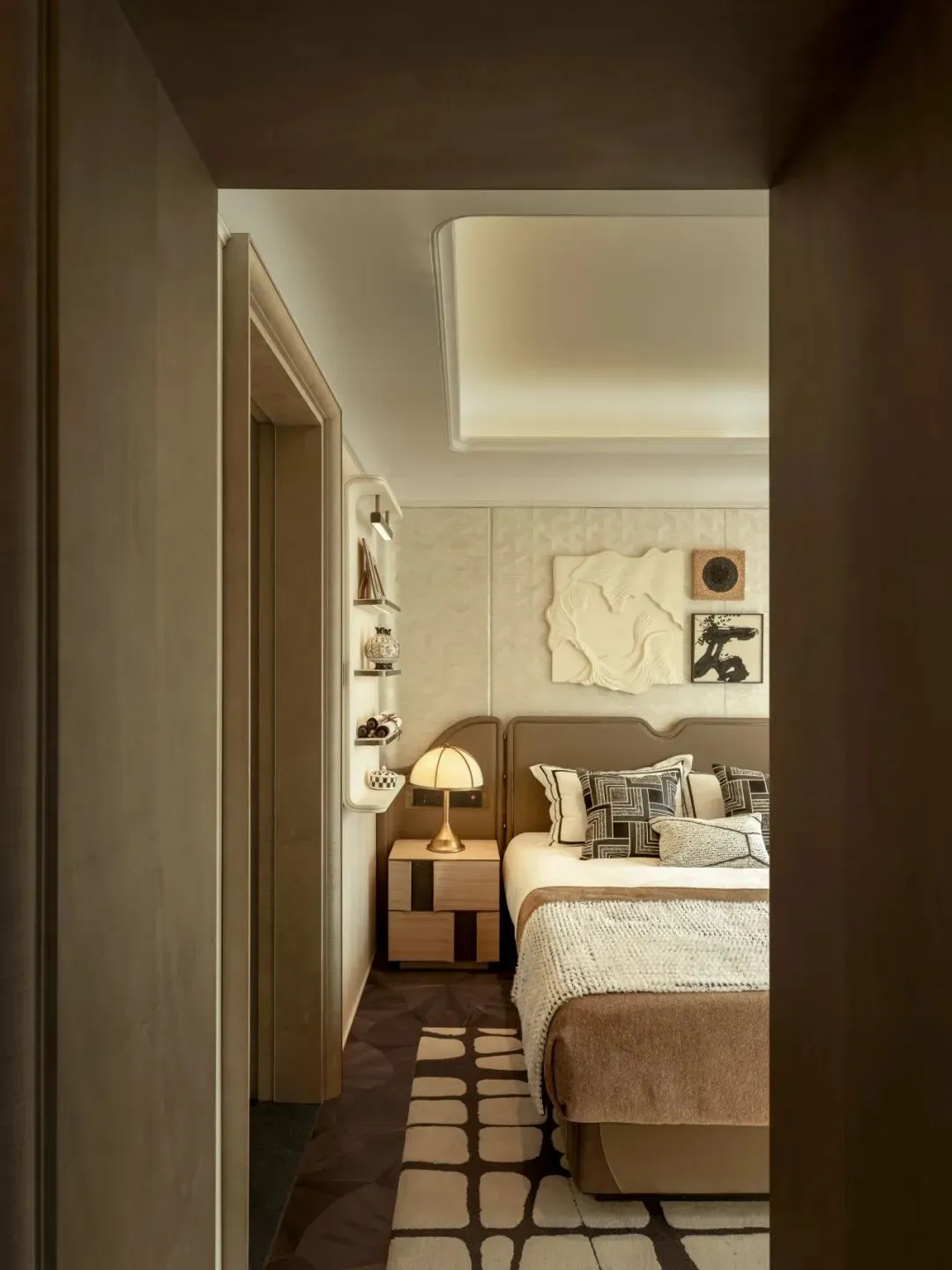
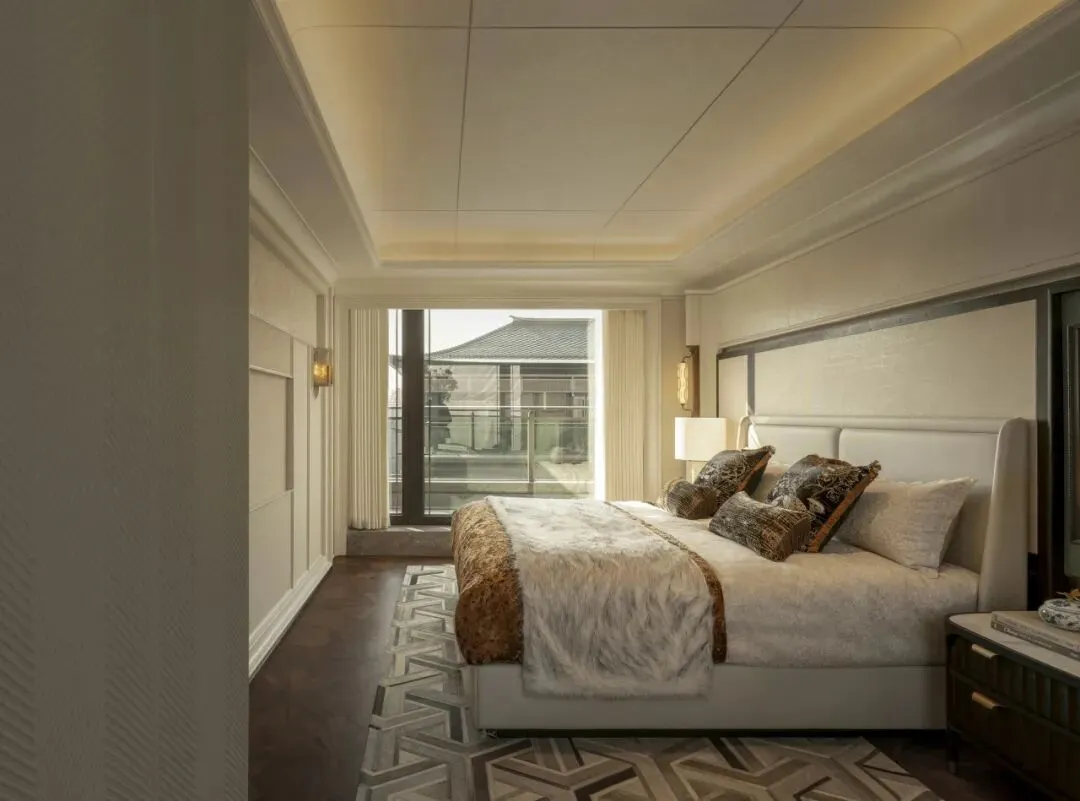
The master bedroom continues the characteristic elegance and restraint of Shanghai culture. The modern leather bed has a clean, crisp silhouette, while the bedding with subtle gilt floral-and-bird motifs adds richer layering to the space. As light glides across the fabric, the flower-and-bird patterns appear faintly, like traces left by time.
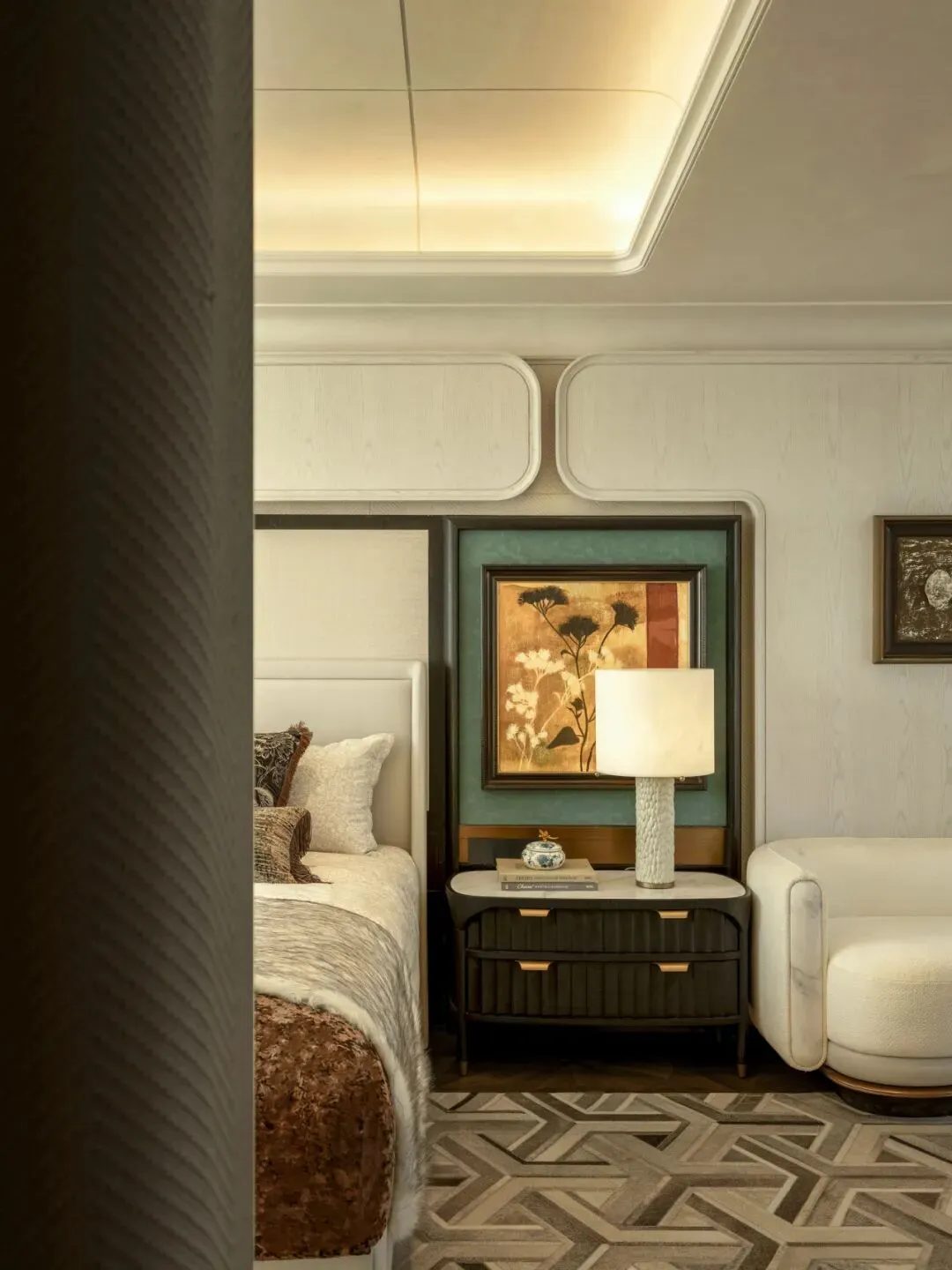
The geometric bedside tables on either side are crafted from a combination of wood veneer and metal. A gemstone green hue runs through them, echoing the theme of the entire residence. The art piece on the bedside backdrop draws inspiration from the white magnolia. As the city flower of Shanghai, the white magnolia has long transcended its botanical form to represent the memory and spirit of the city. Laser engraving interwoven with hand-painting creates a layered effect that blurs reality and illusion, much like the past and present carried by this residence.
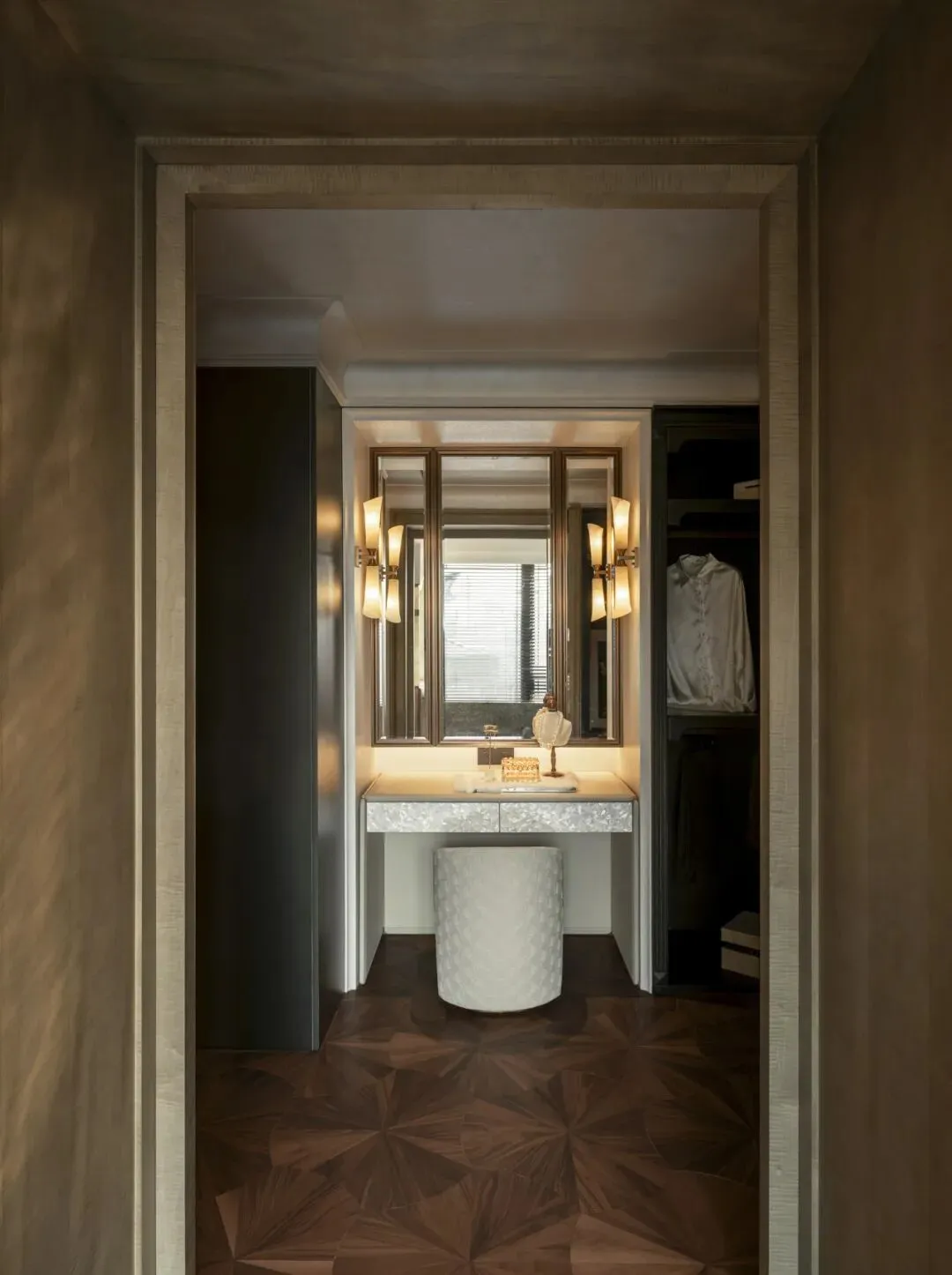
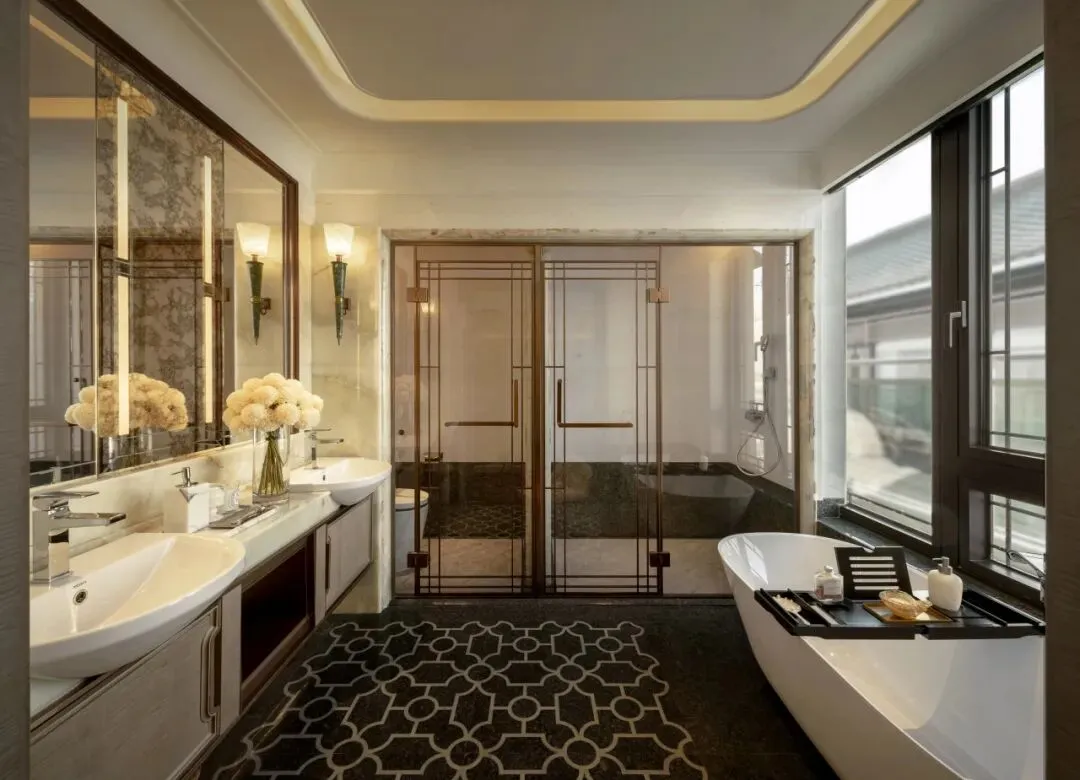
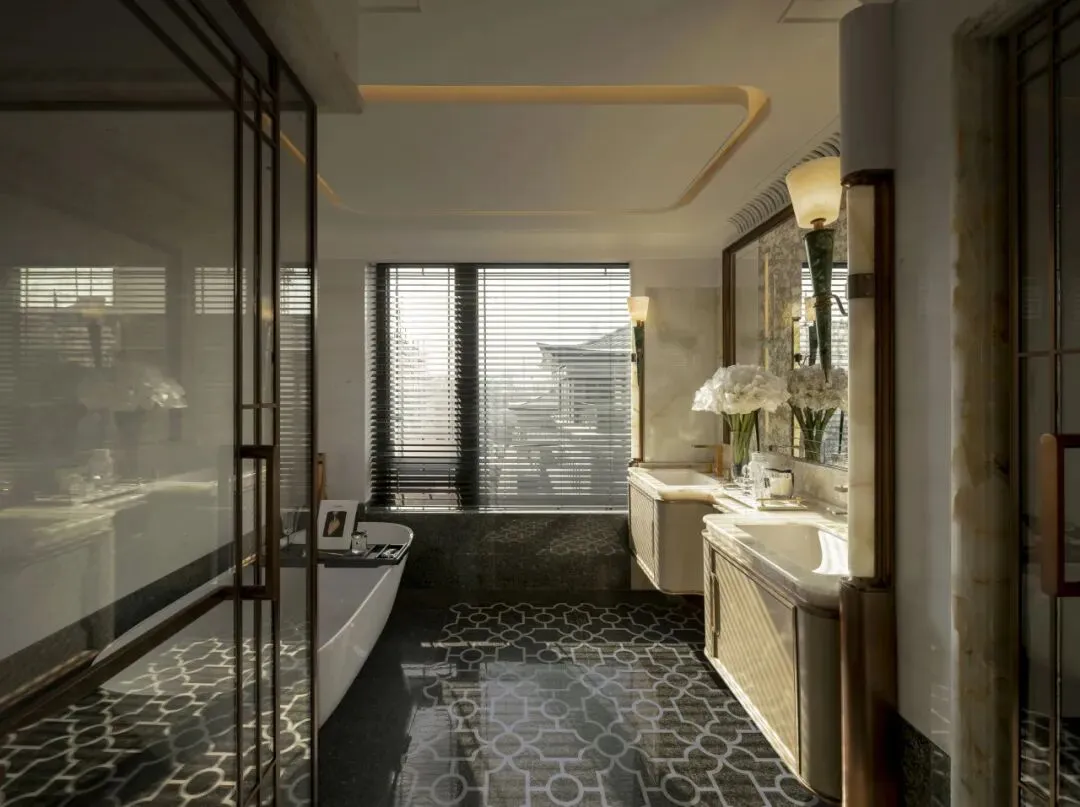
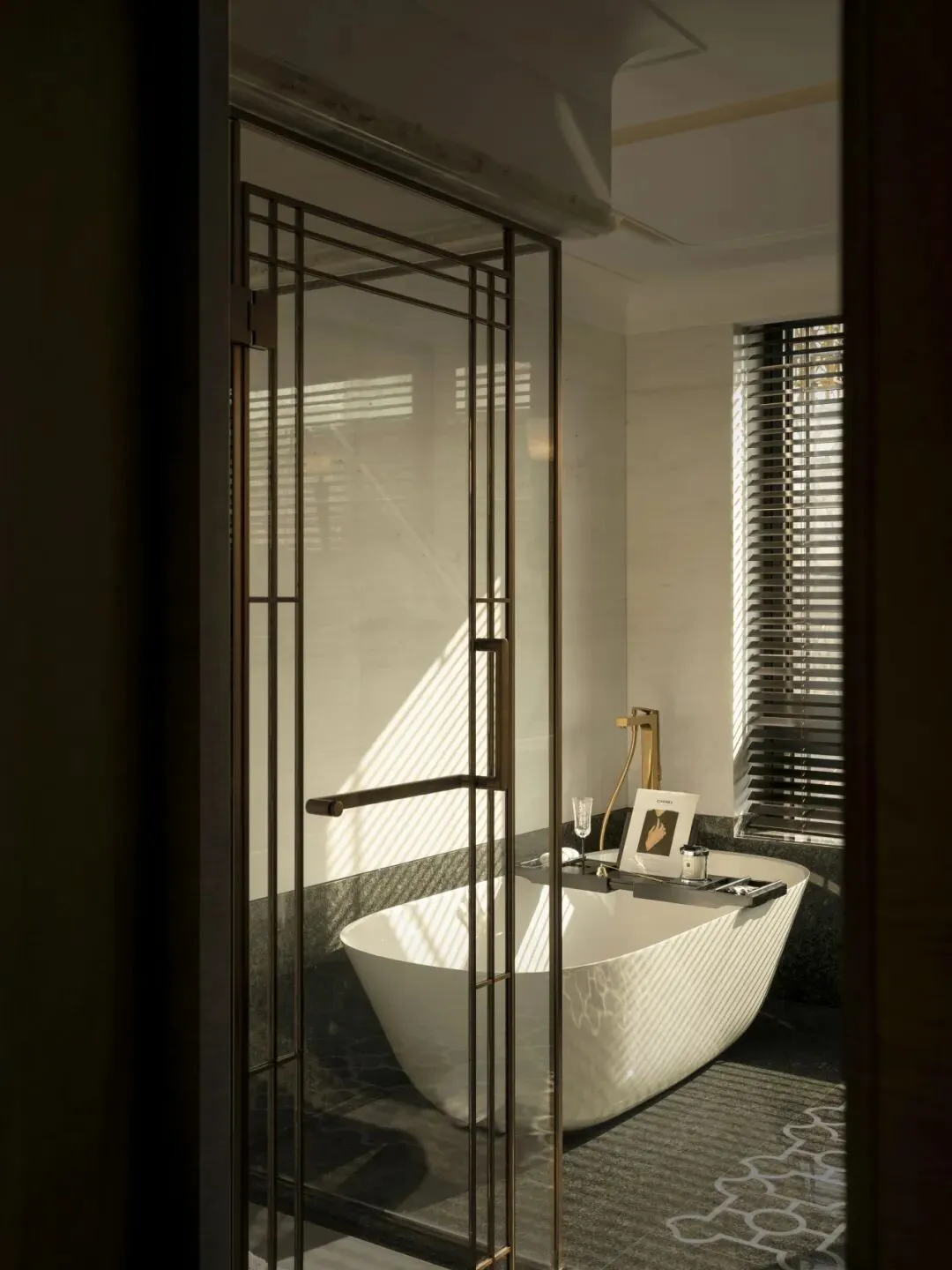
The master bathroom builds a comfortable daily experience with a double washbasin and a freestanding bathtub. Without complex ornamentation, it brings just the right composure to every wash and bath.
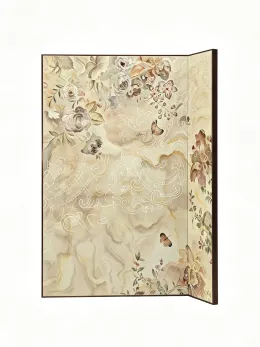
The reception room is not deliberately nostalgic, yet it exudes the elegance of old Shanghai everywhere. Particularly noteworthy is the Shanghai-style embroidered screen with flowers and birds. Peaceful floral-and-avian motifs, wisteria cascading down, magpies perched on branches. The stitching is so fine that you cannot tell the direction of the threads; from a distance it looks like a meticulous brush painting, and only up close do you notice the threads subtly rising under the light. 'There's a similar screen at the former residence of Soong Ching-ling,' says the male host, 'It's not meant to partition the room; it's meant to be looked at.'
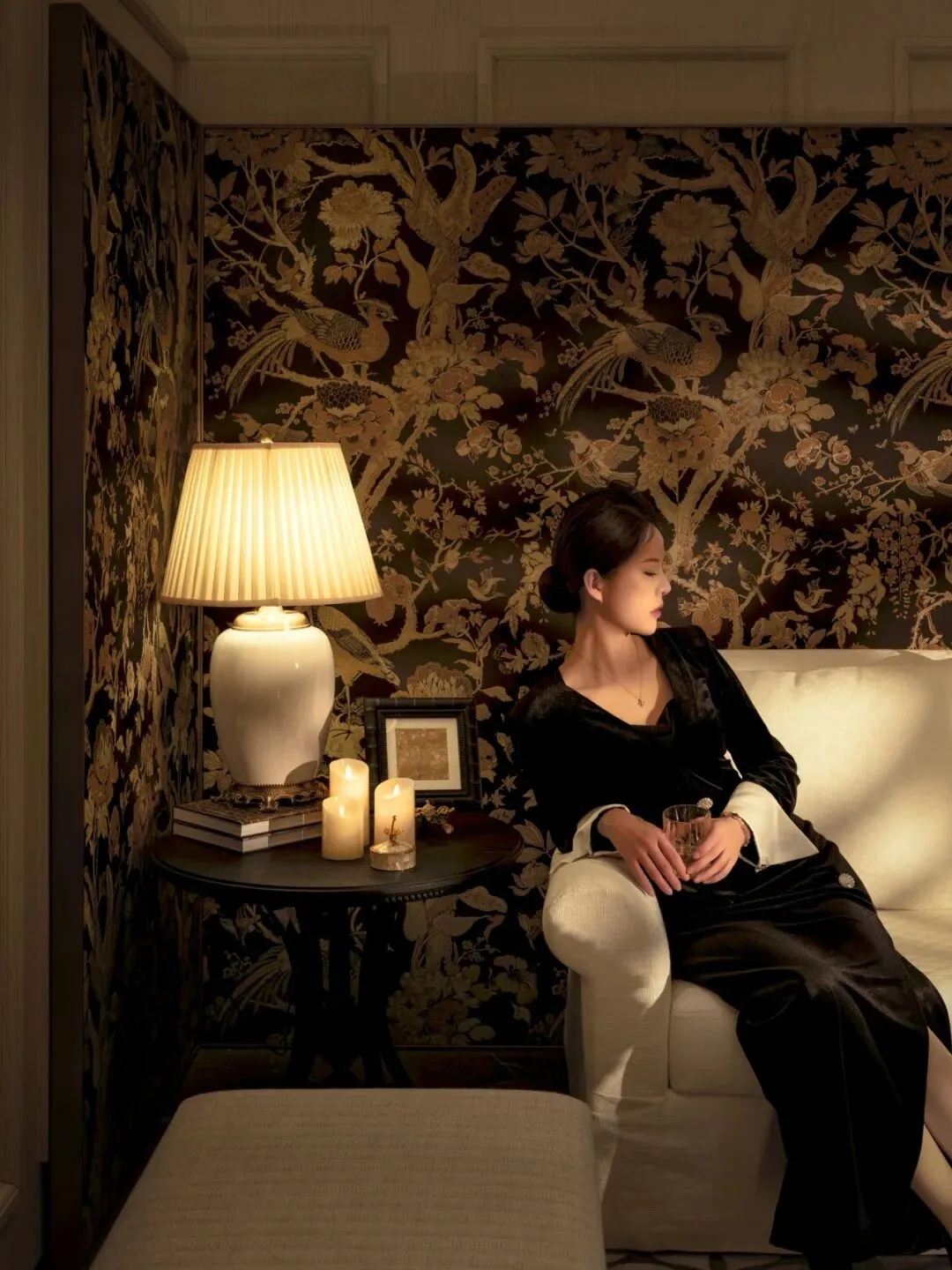
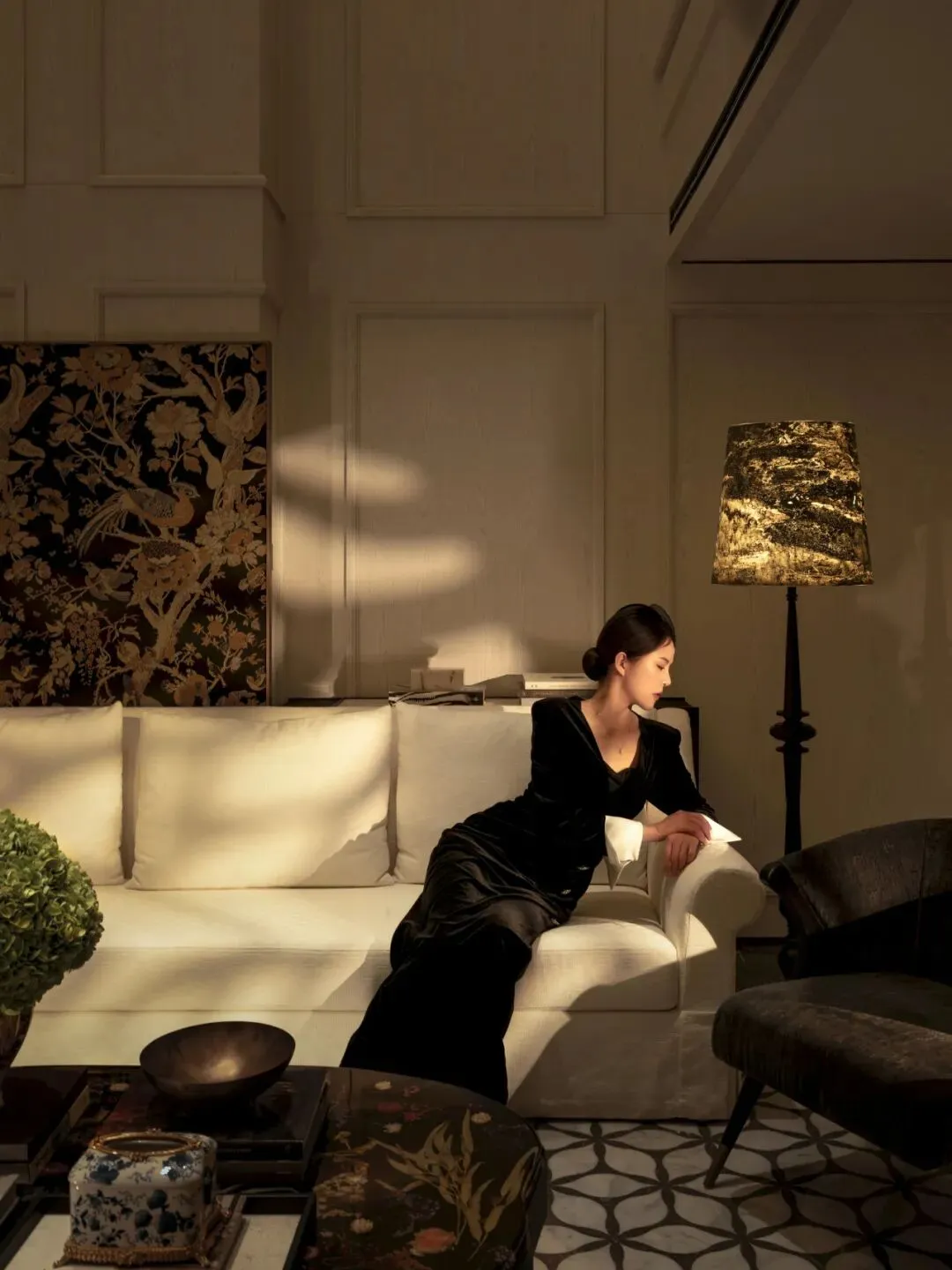
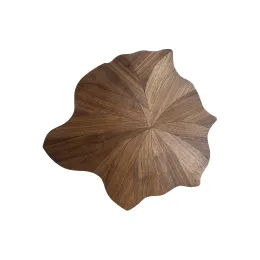
The coffee table is irregularly shaped, with a piece of mother-of-pearl inlaid in the top. When light hits it, it ripples like a circle on water. These details are not conspicuous, but when you sit down and look slowly, you discover how they echo each other. A side table with a Soviet military dog motif adds a touch of collector's whimsy to the space.
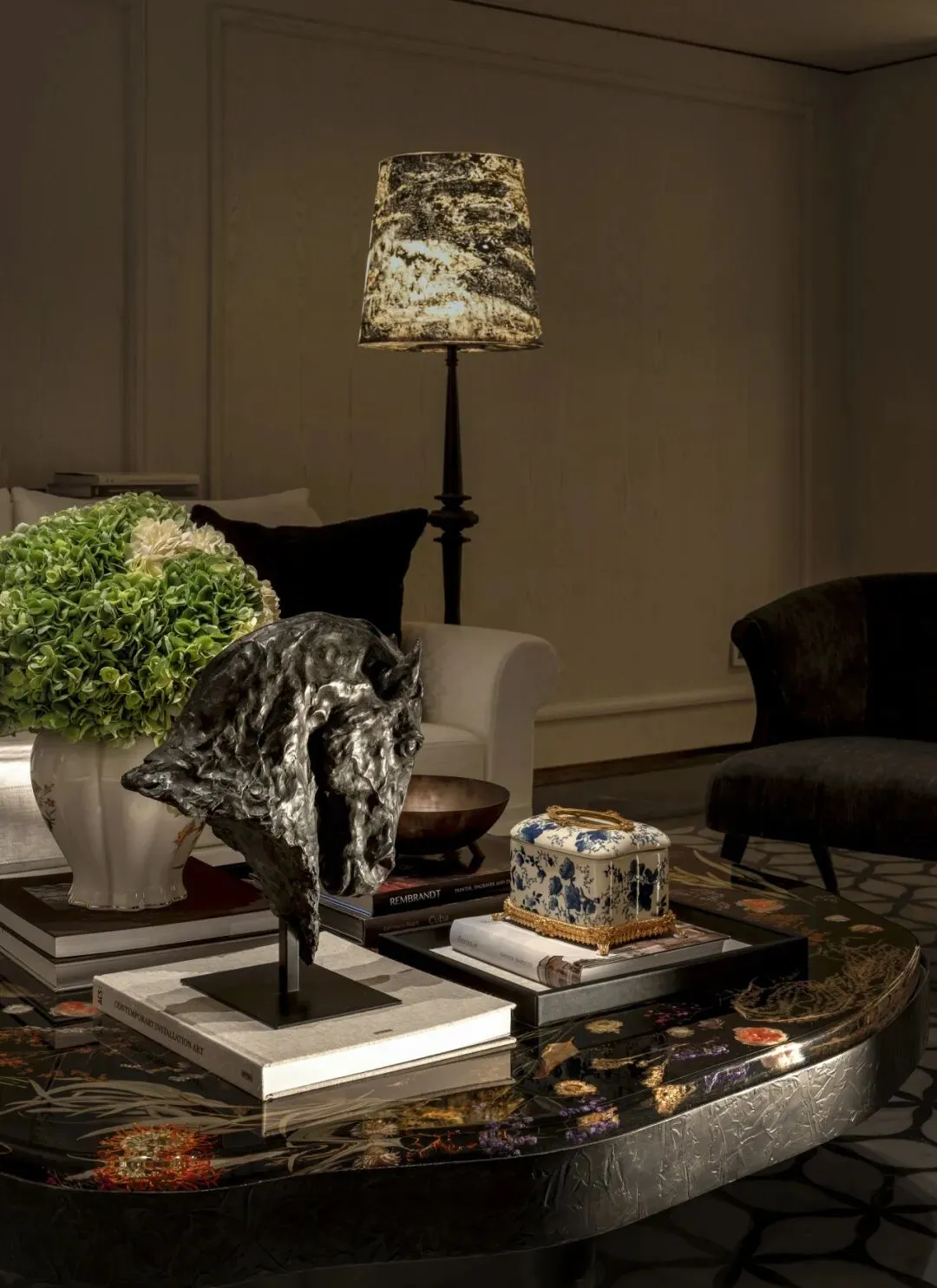
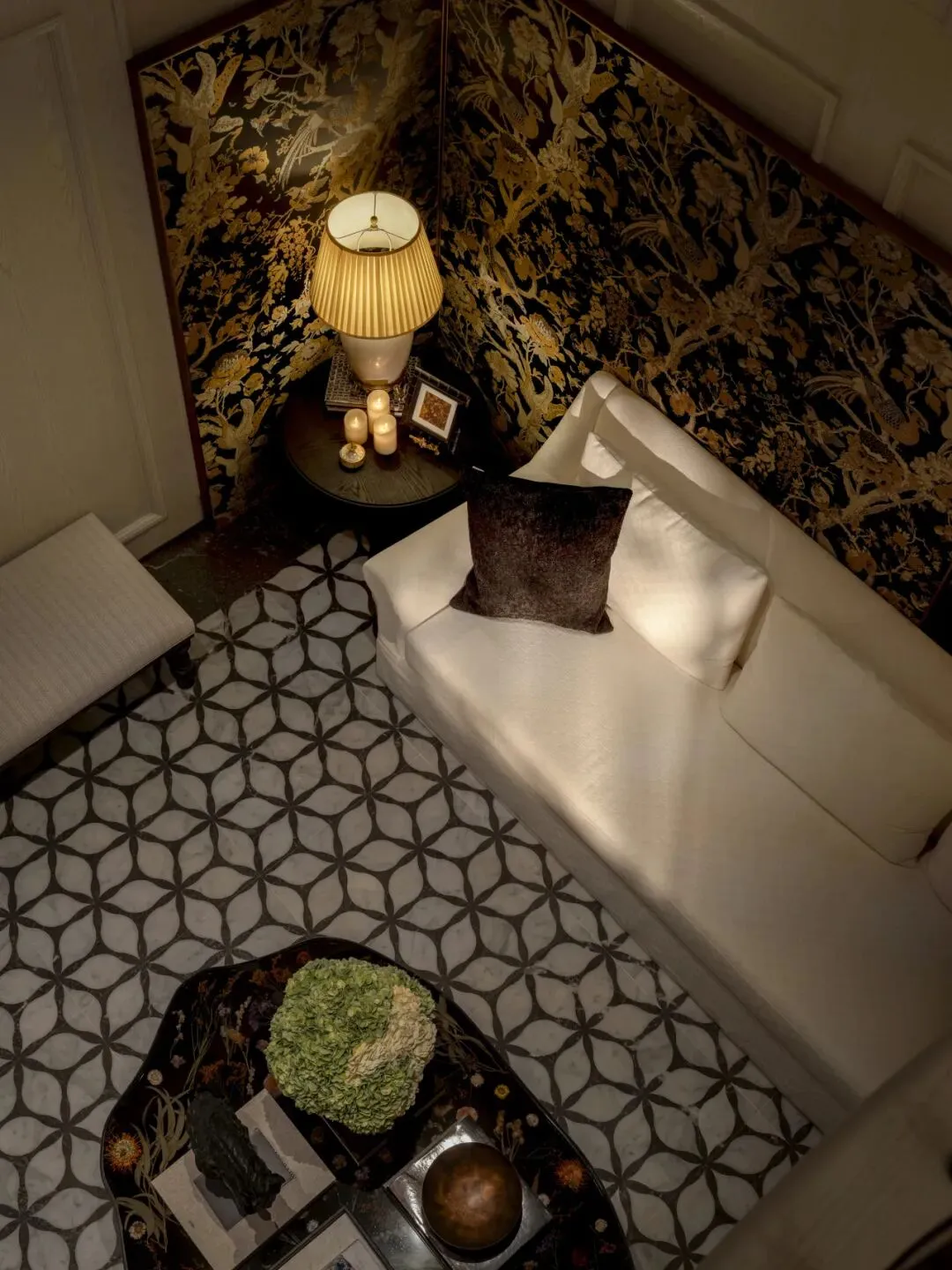
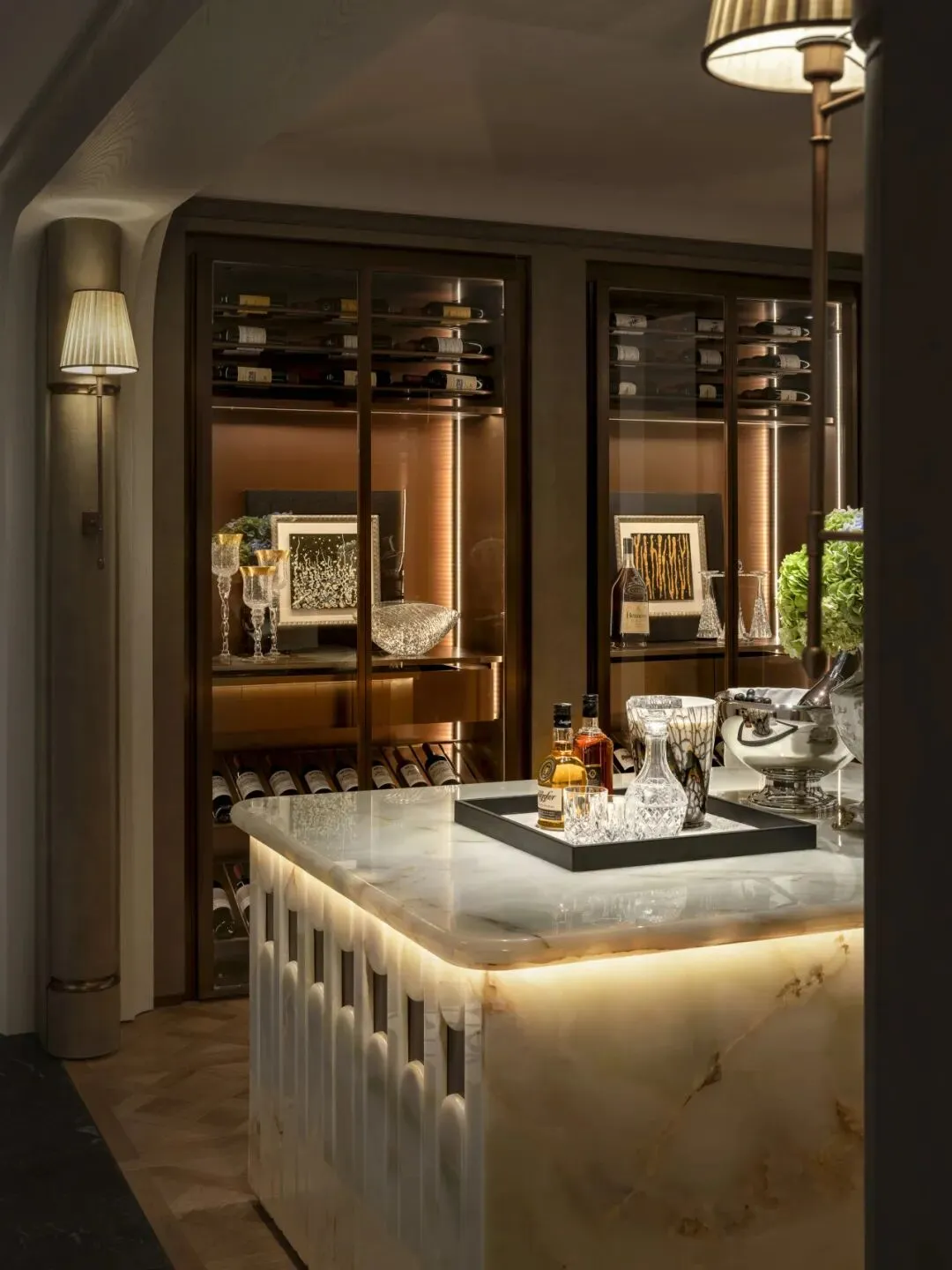
On the other side of the reception room is the male host's favorite place to linger. The bar area houses premium crystal glassware and collectible wines. It feels more like a private lounge. Here, collecting and tasting coexist, and stories abide with time.
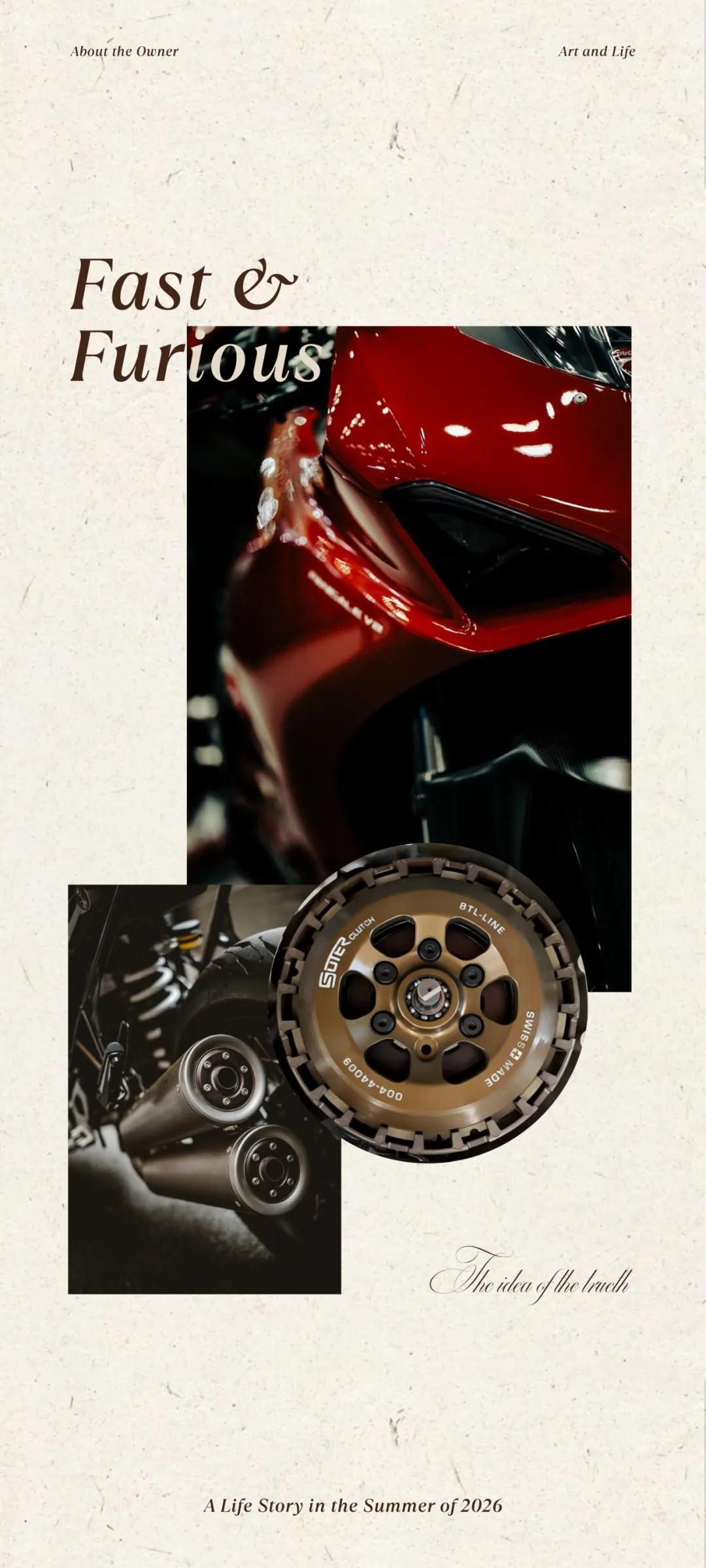
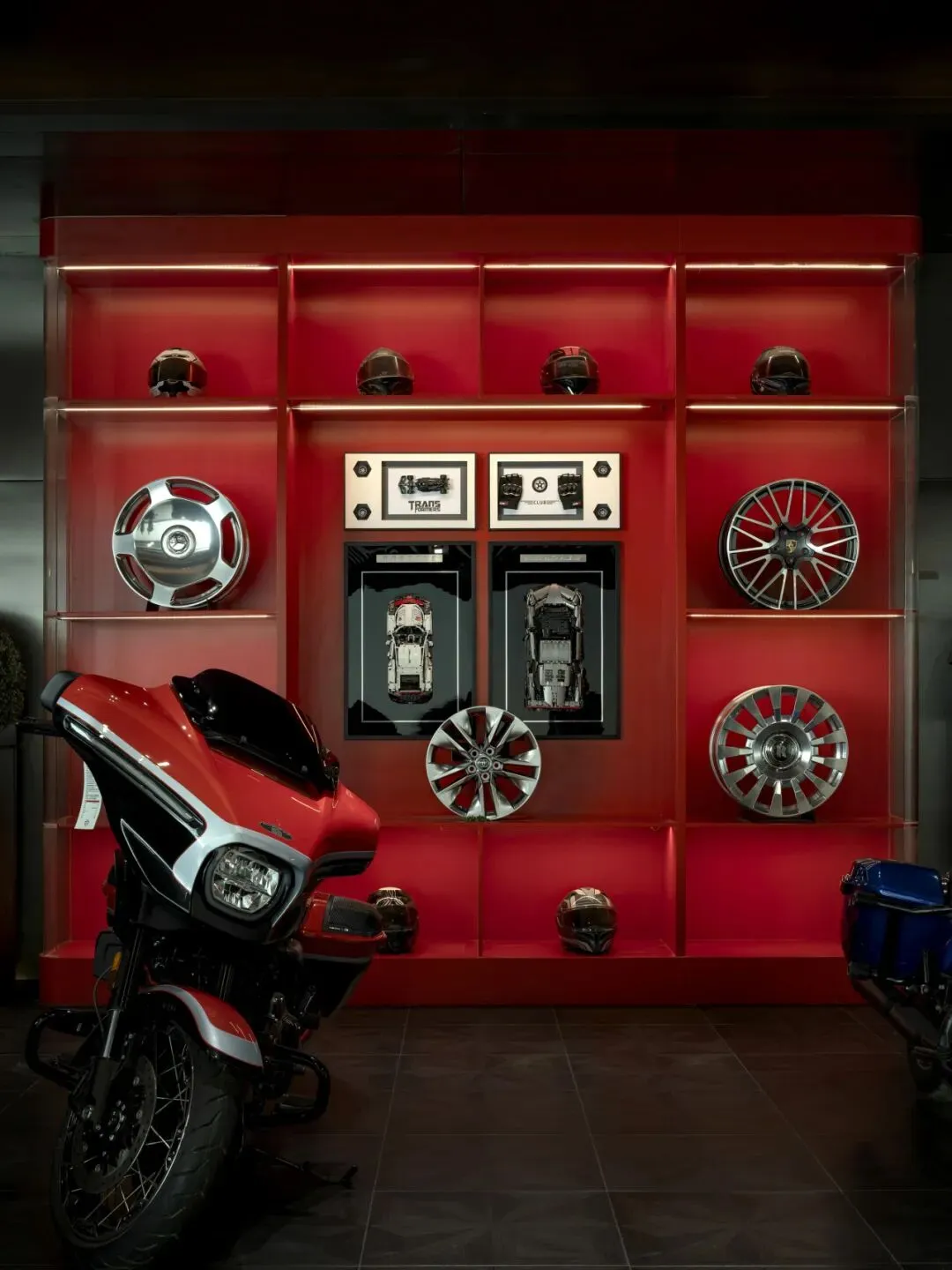
The basement level is the most unique part of the entire residence. The garage has been transformed into a private motorcycle museum. Classic motorcycle models from different eras, vintage helmets, and mechanical parts are properly displayed. The coolness of metal coexists with the marks of time. The male host says with a smile, 'Every machine has its own era.'
Project Name: Nanxiang Guaning Mansion
Project Owner: Shanghai Xinjiangnan Construction Development Co., Ltd.
Project Address: Chengzhong South Road, Qingpu District, Shanghai
Interior Design: CCD Cheng Chung Design
Lighting Design: Zhao Ying Consultant
MEP Design: Zhao Ying Consultant
Art Consultant: CCD·WOWU Art Consultant
Design Area: 553 sqm
Completion Date: December 2025


.jpg?x-oss-process=image/resize,w_260,m_lfit/format,webp)